6/1/14

The Misogyny Debate

Frank Bruni is really, really brilliant today. 
WE no longer have news. We have springboards for commentary. We have cues for Tweets.
Something happens, and before the facts are even settled, the morals are deduced and the lessons drawn. The story is absorbed into agendas. Everyone has a preferred take on it, a particular use for it. And as one person after another posits its real significance, the discussion travels so far from what set it in motion that the truth — the knowable, verifiable truth — is left in the dust.
I hope I am not guilty as charged.  I don't have an agenda or a use for the Santa Barbara tragedy ... as far as I know. I wrote the post below yesterday. Maybe, after reading Bruni, I would have thought "enough already" and dropped the subject. Maybe I'm thinking about the feminist debate about Rodger so much because it's just too painful to think about the parents mourning their children.  That's too close to home for someone soon to send children off to college.  So--mea culpa, but I hate to throw out this post after putting together all the data.

***

Salon editor Joan Walsh observes, "The widespread recognition that Elliot Rodger’s killing spree was the tragic result of misogyny and male entitlement has been a little bit surprising, and encouraging."  So now it's all settled--the guy was a misogynist pig, done!

And here's a line of argument I've seen over and over again, in various quarters.  When racists attack people, we blame racism.  When homophobes attack people we blame homophobia.  Why is it that we can't just go ahead and blame misogyny, in this case?  We must be willing to give a free pass to misogynists!  The horror!

But no.  I'm reluctant to accept Walsh's diagnosis because misogyny comes into the picture very late in Rodger's manifesto, when all the antecedents of his rampage have already been festering for 10 years.  The antecedents are hatred, resentment, misery, loneliness, a sense of unfairness, rage (what you might call being "emotionally disturbed" as opposed to "mentally ill"--we don't know yet about the latter).  Until late in his short life, his hatred doesn't take a specifically misogynistic form.

Of course, not every feeling of hatred for girls or women is misogyny, if you use the term correctly.  Misogyny is not just hatred of women.  If you hate popular boys and attractive girls, the second half of your hatred doesn't add up to misogyny; the first half isn't misandry.  Misogynists both hate girls or women and hate them for particular sorts of biased, gender-related reasons.  They hate then because of actual or perceived feminine traits toward which they feel antipathy.  For example, a misogynist might hate women for being dirty (menstruation!) or for perceived inferiority (dumb, emotional!).  If you hate girls for not liking you, that's not misogyny any more than hating boys for not liking you is misandry.

What I'm going to show is that misogyny makes a very late appearance in the manifesto, after dozens of expressions of revolting but non-misogynistic hatred.


Age 11 (p. 28) - hatred toward other boys

Age 11 (p. 31) - hatred toward cool kids


Age 11 (p. 32) - hatred toward girls


Age 12 (p. 38) - hatred toward boys


Age 13 (p. 42) - hatred toward girls

 Age 14 (p. 45) - hatred toward peers who bully him


 Age 14 (p. 46) - hatred toward peers who bully him


Age 14 (p. 47) - hatred toward boys
 

Age 15 (p. 48) - hatred toward boys and girls

 
Age 16 (p. 53) - hatred toward boys


Age 17 (p. 56) - hatred toward boys; hatred toward people who have sex
 Age 17 (p. 57) - hatred toward couples
 
Age 18 (p. 65) - hatred toward couples
 
Age 18 (p. 65) - hatred toward couples
Age 18 (p. 70) - hatred toward couples

 Age 19 (p. 72) - hatred toward boys
 Age 19 (p. 75) - hatred toward boys
 
 Age 19 (p. 80) - hatred toward boys
 
 Age 19 (p. 81) - hatred toward boys
 
 Age 19 (p. 82) - hatred toward boys and women
 
 Age 19 (p. 83) - hatred toward everyone
 
 Age 19 (p. 84) - hatred toward boys, couples, girls
 

Now we come to misogyny. He starts expressing antipathy toward women for perceived traits. 
Age 19 (p. 84) - misogynistic hatred toward women

But mostly the rest of the manifesto contains the same sorts of thoughts and feelings as before.

Age 19 (p. 87) - hatred toward couples
  
Now the first acts of violence take place. They are directed at a couple, not only at a woman. 

Age 19 (p. 87) - hatred toward couples


The rest of the manifesto mostly contains the sort of hateful talk that's predominated so far, not the explicit misogyny on p. 84.  He starts to plan for the "Day of Retribution" and buys himself guns.  Close to the end, there are a few more misogynistic fulminations, alongside plans to flay people, chop their heads off, and so on.

Age 21 (p. 111) - misogynistic hatred of women

 Age 22 (p. 136) - misogynistic hatred of women


Even though the misogynistic passages are a small minority of the hateful passages, you could say they are critical. You could say that if it weren't for Rodger's theories about female inferiority, he wouldn't have come up with his plan for the Day of Retribution.  Or he wouldn't have carried them out. That's not out of the question, I guess.

But if you read this manifesto, what seems much more overwhelming is the overall pattern of hate, envy, loneliness, resentment, sadness, hopelessness, craving for status, humiliation, despair, etc.  So it is baffling to me that we've settled on misogyny as key to understanding why this happened.

Maybe the focus on misogyny is helpful, in so far as there are other misogynists out there rallying at websites.  We ought to be on the alert for them.  We should be concerned about what they have done or may do to women. Obviously we should condemn misogyny and recognize it's not such a rare thing. But the one who went on the rampage is this one man, who left a very extensive record of his state of mind. What's in that record is mostly other things, not misogyny.  Shouldn't we pay attention?

***

But then what Bruni said. I think he's right and so I'm going to stop writing about this subject! 


5/30/14

Why?

A lot of people have been insisting that we must be incensed by Elliot Rodger's killing spree not only because of the death toll, but because he was a misogynist.  I got to thinking about this and read his manifesto (my highlighted version is here).  Here goes--my thoughts about why he did it, and the role played by misogyny.

Starting at puberty Rodger begins to worry that other boys/men get to have sex with beautiful girls/women, and he doesn't.  Life is horribly, horribly unfair, he thinks. The manifesto contains endless passages expressing anger against men, and endless passages experessing longing for women.  Even when he expresses hatred for women, throughout most of the manifesto it's not hatred because they're women, or because they're inferior. He hates women for not giving him sex, just as he hates men for not giving him friendship. These hatreds are parallel, one no more driven by gender bias than the other. 

The turning point in the manifesto is pg. 88.  This is when he starts to become violent and realizes he could become very violent.  Twice he witnesses couples making out, and then furiously throws his coffee at them. He doesn't feel furious because women are crap or expendable or "just things," but because life feels unfair. He is furious that women are unattainable for him, but attainable for others.    He cannot do anything or go anywhere without noticing couples and resenting his inability to attain the pleasures of sex and love.  He even has to drop classes he's taking because he's so disturbed by couples and attractive women.  He is totally obsessed.

For a while he gets the idea he can solve the problem by dressing well or winning the lottery and thereby attracting a woman, but of course that doesn't work.  After additional minor attacks on couples and groups of women he decides it's time to start preparing for the Day of Retribution, when he will punish everyone for his sufferings.  He buys a gun.  The planning and the gun purchase are not preceded by sexist or misogynistic ravings, but by the very same obsessions that fill the manifesto--it's not fair, I long for girls, but other, less worthy guys always get the girls.  He seeks retribution because that's the only way he can think of to rectify this terrible unfairness.

Rodger shows little sign of being particularly sexist for most of the manifesto, but he does have a very warped idea about male-female relationships. He thinks getting sex is some kind of a reward for being an impressive man. Having a woman at your side tells everyone "This guy is great!"  Not having a woman says "This guy is a loser!" He fails to understand the connection between friendship and sex, and thus cannot start down a path that could lead to sex. 

Starting on p. 117 things change and he starts fixating on his hatred of women. Prior to this, I think expressions of hatred for men are far more numerous.  He is desperate to explain why women don't feel attracted to him.  He can't bear to think it's because of something about him, so he finds fault with women.  Now he writes a paragraph of extreme misogyny.  But it is very late in the day.  This comes after the plan for retribution has been made and the first gun has been purchased, and after hundreds of expressions of anger toward men as well as women, and after hundreds of complaints about life's unfairness.

After the misogynistic paragraph, he quickly comes back to his standard theme: "Women must be punished for their crimes of rejecting such a magnificent gentleman as myself.  All of those popular boys must be punished for enjoying heavenly lives and having sex with all the girls while I had to suffer in lonely virginity."  (p. 118) And: "I wanted to kill as many attractive young couples as I possibly could."  Which is not to say there is never any gender-directed hatred: "My hatred of the female gender could grow no stronger."  But he is angry at women because they haven't chosen him for sex, and that is all.

Here's what he says about the roommates he murdered: "These two new ones were utterly repulsive, and one of them had a very rebellious demeanor about him....I knew that when the Day of Retribution came, I would have to kill my housemates to get them out of the way. If they were pleasant to live with, I would regret having to kill them, but due to their behavior I now had no regrets about such a prospect. In fact, I'd even enjoy stabbing them both to death while they slept." (p. 128) Yes, he hates these guys too, not only the sorority women he plans to kill.

Here's a sentence about his sister's boyfriend, toward the end. It sums thing up pretty well:  "It is such an injustice. The slob doesn't even have a car, and he is able to get girlfriends, while I drive a BMW and get no attention from any girls whatsoever." (p. 129)  But then, there is this misogynistic statement about his mother:  "But then again, my mother is a woman, and women are all mentally ill."  (p. 130) So his anger does occasionally well up into misogyny.

The final passages include fantasies of sadistically killing "everyone" and fantasies of killing women in particular.  "I will punish all females for the crime of depriving me of sex." (p. 132)  There's nothing in here about how all women are for sex. He's not saying everyone should get to have sex with any women they want. The complaint is that women wanted to have sex with other men, not with him. It was unfair.   He does want to kill others, not just attractive women:  "I can only imagine how sweet it will be to ram the SUV into all those groups of popular young people..." (p. 142) 

But then (yes) there are also misogynistic tirades. On p. 136 he writes about abolishing women, putting them in concentration camps.  This is around where he also calls himself a god. He's days away from committing mass murder. To my mind the anger and sense of injustice that's filled his head for years and years have now generated both an extreme misogynistic fantasy about women and a plan for mass murder and a lot of other lunacy.  The anger came first and had multiple effects--the misogynistic tirade and other strange thoughts, and the rampage.  The misogyny at the end isn't what made him plan to commit murder or carry out the plan.

What you can learn from this manifesto is that one source of murderous anger is the sexual angst of unsuccessful men.  If that is right, then the feminist response we've seen (see here and here) invites us to focus on  the wrong thing: the widespread problem of overly aggressive boys and men who hit on women, grab at them, commit date rape -- the usual excesses of aggression. Elliot Rodger was a very passive boy/man until his "day of retribution."  Yes, yes, of course, he killed a lot of people, which is very aggressive.  But the state of mind that led up to this was one of totally passive dysfunctionality.  This is a guy who didn't harass girls, didn't grab butts, didn't impose himself on anyone. To get women's attention he tried to win the lottery over and over again, and bought himself fancy clothes. He wanted the flattery of receiving a woman's attention. 

Of course the misogynistic passages of this manifesto are revolting.  In fact, they're so revolting there's no way it can be true that Rodger got these ideas from the culture, as some commentators have said.  Right beside the misogynistic passages about putting women in concentration camps (p. 136, close to the end of the manifesto) there are passages about flaying people, cutting their heads off, slaughtering them by the hundreds.  Rodgers has completely fallen apart by this point. He's exploding in rage.  By reading the manifesto, you can see what brings him to this point, and it's not immersion in a sexist culture.

Moral of the manifesto: beware the shy, passive guy on the sidelines. I think that's been the moral after many of these mass killings.  The question is: what to do about it?


5/28/14

Vaccine Refusers

Most vaccine refusers seem to fall into four groups:
  1. Conscientious Refusers--people who reject all vaccination, like conscientious objectors in wartime reject all fighting.  They usually have religious reasons. 
  2. Critical Refusers--people critical of mainstream science and medicine.  They will go on thinking vaccines cause autism (for example) no matter how many studies show otherwise.
  3. Doing/allowing Refusers--they see a problem with doing something that stands a chance of causing serious side effects, but see no problem with allowing a child to be infected with a vaccine-preventable disease.  Unlike those in group 1, they would accept a vaccine with no associated risks.
  4. You-first Refusers--people who think enough other people are vaccinating their children so that they don't have to.  In the early days of a vaccine, when herd immunity doesn't exist yet, they will vaccinate their children.  In the late days, when they think herd immunity protects their children sufficiently, they opt out.
It's the You-first refusers that are interesting, to my mind.  Thinking about them, you have to open the "social ethics" toolbox, maybe taking out the prisoner's dilemma, the tragedy of the commons, Kant's categorical imperative, the voter's paradox, the social contract, questions about the morality of freeriding, etc.

But who thinks like a You-first refuser?  Aren't real world vaccine refusers all in groups 1 and 2?  In fact, a popular author outright welcomes his readers to be You-first refusers.  Here's a delicious/horrifying passage from The Vaccine Book, by Robert Sears, MD.

I do "fault parents who think vaccines are too risky and decide to put their own kids first."  I don't think parents "do, and should, have the right to decline vaccination"--if he means a moral right.  I'm not even sure parents should have a legal right.  But how exactly to make the case?  The passage is interesting and challenging because it's not immediately obvious how best to respond.  Or rather--you can come up with a roughly right response pretty fast, but it's not obvious what is the exactly right response.

Back to work....

5/21/14

Deadly Choices


This  is a superb book--full of information about infectious diseases, the impact of vaccination, the history of vaccination resistance, the autism controversy, and also some very interesting passages about vaccination ethics and the tragedy of the commons.  Plus it's very readable and succinct.  Highly recommended!


5/20/14

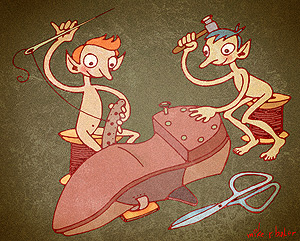
The Elves and the Cobbler

Here's a scenario from Garrett Cullity's article "Moral Free Riding"--

The Enterprising Elves
On the first day in my newly carpeted house, I leave my shoes outside. In the morning I am delighted to find they have been extraordinarily well repaired.  I am less delighted when I receive the bill. (p. 10) 

This is supposed to be the same type of situation as Robert Nozick's radio thought experiment, which is meant to show there's not always an obligation to pay for benefits nonvoluntarily received. 

I say "Right" about this scenario--I don't have to pay the elves--but it seems to me that outright requesting benefits is more than what's needed for there to be an obligation to pay.  Consider this continuation of the story of the elves:

The Enterprising Elves and the Cancelled Cobbler
After putting on my shoes and tossing out the bill, I stroll to my cobbler's shop and cancel my monthly shoe repair appointment.

That seems to change things.  If I were indifferent to the elves' services and had no monthly plan with the cobbler, I could indeed toss out the bill and never look back.  But in fact I welcome their services.  Now at this point in the story, it's hard to say I have to pay for the elves' work.  Should I pay the elves even though they invaded my cobbler's turf?  Should I pay my cobbler, even though he didn't repair my shoes?  But consider this:

The Elves Come Back
A month has passed and as usual I leave my shoes outside my door.  The elves once again repair my shoes.  I no longer have a standing appointment with my cobbler.  Once again I toss out the bill.

To my my mind, now the unrequested repairs do have to be paid for. True, I didn't request the repairs, but I welcomed them and my behavior shows I'm counting on the elves to show up.  If I'd really wanted to avoid the obligation to pay the elves, I would have had to keep my shoes inside. If I couldn't do that--remember the carpets--then I needed to show I was not counting on the elves by maintaining my appointments with the cobbler and paying his bills.  But it just can't be that I may continue to receive the repairs, having arranged my life accordingly, but I don't have to pay for them.

Extrapolation to vaccination ethics ... well, long story.  We'll save that for another day.

5/19/14

When is freeriding wrong?

One reason we ought to vaccinate children is because otherwise we'd be receiving the benefit of other kids' being vaccinated for free--we'd be freeriders.  On top of that, we may have to vaccinate simply to protect our own children or for altruistic reasons--to protect vulnerable people the child comes into contact with.  But if you are a member of a society with high rates of vaccination, the "No freeriding!" reason will be a major one, at least with respect to many standard childhood vaccinations (on the various ethical issues raised by different vaccinations, see this very useful article).  So it's important to figure out when freeriding is morally wrong--and whether it's wrong when vaccination refusers do their refusing.

Certain scenarios make it pretty clear that freeriding isn't always wrong.  Robert Nozick's example of the freeriding group radio refusenik is a nice example of permissible freeriding.  Generally speaking, it just can't be that an aggressive neighborhood association can saddle me with endless obligations to contribute to their collective schemes.  Likewise, an enthusiastic PTA may generate any number of projects that do have benefits for all, but we wouldn't want to say they have the power to make it obligatory for parents to pitch in on all of these things.  The basic intuition here, I think, is that there's a difference between receiving benefits you requested and receiving benefits that come unbidden.  But what about these unbidden benefits?  There are cases and then there are cases.

Here are three that involve individual rather than collective benefits, but I think they're illuminating nevertheless:

Case #1 - The Accidental Subscription. Suppose due to a mistake somewhere, you wind up being sent a subscription to Rolling Stone.  You receive it every week and read it, not bothering to contact the magazine to let them know their error.  (Real life example!)

Case #2 - The Requested Subscription.  In this scenario you get Rolling Stone because you requested it.

Case #3 - The Double Subscription.  In the third case, you have a requested subscription, and then an accidental subscription starts to arrive.  You think "Lucky me!" and cancel your paid subscription.  You continue enjoying the accidental subscription without paying for it.

If benefits must be requested for you to have to pay for them, then you have to pay only in Case #2My intuition, though, is that you have to pay in both Case #2 and Case #3.  You didn't request the subscription you go on enjoying in Case #3, but your actions are tantamount to requesting it.  Your actions show you'd be prepared to pay, if it came to that. After all, you're on standby, ready to do differently, if you're ever threatened with losing the benefit.  You paid for a subscription before you got lucky, so presumably you'd pay again, if the free copies stopped arriving.

This analysis carries over pretty well to cases where one benefits from a collective project.  I don't have to support the neighborhood radio show because, though I may enjoy it, I'm not on standby, ready to do differently if my non-participation threatens the show.  I'm prepared for the show to fail.  Some goes for many (but not all!) PTA projects.  I'm not on standby, ready to do any differently.  Vaccination is different.  Many refuseniks would presumably participate, if their non-participation threatened the immunity of their child's school.  The vaccination refusenik is therefore not just a benefitter from but a welcomer of immunization.  In fact, more than that: the refusenik is poised to participate more, if others participated less. 

Now, collective projects are more puzzling.  The magazine subscriber in Case #3 is prepared to pay, if paying is needed to keep the magazine coming. He's on actual standby, ready to take out his wallet.  The vaccination refusenik is not on actual standby, but only on "hypothetical" standby:  she would be prepared to vaccinate, if (contrary to fact) that were ever needed to preserve herd immunity.  Arguably, though, the same moral flaw is on display in both cases: putting yourself on mere standby, while others actually pay for a benefit you value, makes you an exploiter of actual payers. 

If you're not on standby, but ready to see an unrequested product disappear or a collective project fail, that's another matter.  We might still judge you harshly--for having terrible judgment about the worth of the project--but you wouldn't be a freerider.  You might even be something worse, but you wouldn't be a (bad) freerider.


5/16/14

"Soft Atheism"

Philip Kitcher hits many nails on the head. I like what he says about the reason to be skeptical of all religious beliefs.  Yes, this really is "the most basic reason for doubt" (or one of them):
The most basic reason for doubt about any of these ideas is that (when you understand words in their normal, everyday senses) nobody is prepared to accept all of them. Even if you suppose that Judaism, Christianity and Islam share some common conception of a divine being, the Hindu deities are surely different, the spirits and ancestors of African and Native American religions different again, and that’s before we get to Melanesian mana or the aboriginal Australian Dreamtime. It’s very hard to think that every one of these radically different conceptions picks out some aspect of our cosmos.

So asserting the doctrines of a particular religion, or family of religions, requires denying other contrary doctrines. However, when you consider the historical processes underlying the doctrines contemporary believers accept, those processes turn out to be very similar: Long ago there was some special event, a revelation to remote ancestors. Religious doctrine has been transmitted across the generations, and it’s learned by novice believers today. If the devout Christian had been brought up in a completely different environment — among aboriginal Australians or in a Hindu community, say — that person would believe radically different doctrines, and, moreover, come to believe them in a completely parallel fashion. On what basis, then, can you distinguish the profound truth of your doctrines from the misguided ideas of alternative traditions?
I also like what he says about rejecting religious doctrine while retaining the achievements of "religions at their best":
To sum up: There is more to religion than accepting as literally true doctrines that are literally false. Humanists think the important achievements of religions at their best — fostering community, articulating and supporting values — should be preserved in fashioning a fully secular world. That secular world ought to emerge from a dialogue between humanism and refined religion, one in which religion isn’t thrown on the rubbish heap but quietly metamorphoses into something else.
"Soft atheism," he calls this. 

5/15/14

Nozick's Group Radio Thought Experiment

Here's a fun thought experiment from Anarchy, State, and Utopia (Robert Nozick), with a few variants at the end:


Do I have to take my turn and produce a radio show?  Surely not.  We can't be lassoed into obligations that easily--just because some group of people decides to jointly bring about a public benefit.

My thought is: OK, I agree with Nozick about that scenario--you don't have to produce the radio show on your appointed day.  But what's going on here, and how is this different from other cases in which you are a nefarious freerider for refusing to contribute to a joint enterprise you benefit from but didn't request or initiate?

5/14/14

A Vaccination Antinomy

Background:  Mary and her daughter Violet live on an island with a vigorous voluntary vaccination program.  There is nearly 100% compliance, so the population has herd immunity against serious disease X.  There are periodically a few immigrants who may carry X, enough to necessitate continuation of the vaccination program.  But not enough to destroy herd immunity. The rare refusers don't vaccinate because their children have special medical problems, but Mary isn't in that category. Vaccination records are confidential.  The public at large won't know what Mary decides to do.

Here's an argument that Mary should vaccinate Violet. To do otherwise is to unfairly freeride on the other citizens.  After all, Mary does believe in the vaccination program and does desire its benefits.  She is only contemplating not vaccinating Violet because the others have vaccinated their children.  If she goes through with it, she will be taking advantage of everyone else.  She will be making an exception of herself, acting as she would not want others to act.

Here's an argument that Mary shouldn't vaccinate Violet.  The vaccination is painful, and also poses slight risks.  So Mary has to be able to justify the harm she would do to Violet. But she can't.  We may harm our children a little or even a lot, to prevent a more serious harm to them.  We may harm them a little, to prevent a very serious harm to others.   But this case fits neither description.  Having her vaccinated would not benefit Violet, since she's already immune to X.  It wouldn't benefit anyone else either, since the whole population is immune.  It wouldn't even benefit others by encouraging them to keep vaccinating their children, since records are confidential--no one will know if she doesn't vaccinate. 

Note: in the real world, people aren't caught in this bind.  We don't know there's herd immunity against any particular disease.  We can always justifiably think vaccinating a child has some chance of benefitting both the child and others.  (And by the way, my own children did receive all the routine vaccinations plus others.)

The scenario isn't real, but it also isn't far-fetched.  People could be sure their community has herd immunity against X, and it seems to me these two arguments would genuinely compete for our attention in such a situation. Though I initially lean toward argument #1, it does strike me as strange for a parent to have a child jabbed, in the full knowledge that this is "for fairness" and without benefit to the child or anyone else.  Thus:  puzzlement.

5/13/14

Freeriding and the PTA

For purposes of writing a book chapter about vaccination ethics, I've been thinking about freeriding.  Never mind vaccination for the moment.  Let's talk about flowers.

A long time ago the PTA at my kids' elementary school did a lovely job of planting bushes and flowers in front of the school.  We paid our PTA dues, but that's it.  By the usual definition of "freerider" I seem to be one--I received the benefit of the planting, but didn't fully pay for it, since I did none of the labor.  My reasons for not helping seem to acquit me, though, which goes to show that "freerider" isn't automatically pejorative.  A "freerider" is not necessarily a freeloader, a moocher, a cheat.  There are innocent freeriders and guilty freeriders.

So, my reasons.  I benefited from the flowers, but really just by accident.  I couldn't help but pass by them when taking my kids to school.  I can't say that I wanted to see them planted, beyond a casual "that's nice."  I wasn't doing so little to help because others were doing so much.  Had they done less, so there would have been no flowers,  I would have done just as little.    To be a bad freerider, I have to (a) benefit from a public good without fully paying but I also have to (b) endorse the good--care about it, want it, as opposed to merely receiving it.    There are some things we all must be presumed to care about -- clean air, good health, etc. -- but flowers aren't among those things. I can't be accused of self-deception if I say I didn't care (much) about the flowers.

Suppose I had really cared about the flowers but lots of people wanted to plant them.  In that case, my contribution would have been gratuitious or worse. I would have been in the way, or might have crowded out another eager worker.  To be a bad freerider, I'd have to meet conditions (a) and (b) but also something like (c):  I could contribute without excluding those for whom helping is a privilege (assuming for me it's not).

Then we need a condition having to do with self-harm.  A bad freerider meets conditions (a), (b), (c) and also (d):  I could contribute without causing excessive harm to myself or others.  Of course, I might have a slightly aching back afterwards, and my child might be slightly less happy during my absence.  But I'm excused if helping is going to mean having a heart attack or abandoning my sick child, or what have you.

Again, never mind vaccination.  I'm pondering, for the moment, whether this is a good enough definition of "bad freerider" for purposes of deciding when you have to participate in PTA activities and when you don't. 

4/22/14

Trigger Warnings vs. Warnings

It seems ludicrous that the ubiquitous "trigger warnings" are spreading from the internet to college syllabi, but I submit that what's ludicrous is the "trigger" part, not so much the warnings.  Putting "trigger warnings" everywhere makes it seem as if many of us are on the verge of an uncontrollable meltdown. All it would take is being exposed to one blog post, or even a two line tweet.  On the other hand, take the "trigger" out of "trigger warning" and you just have "warnings," which do seem appropriate in some cases.  I don't have to see my students as utterly fragile and constantly "triggerable" to worry that in depth exposure to certain topics could be seriously problematic for some of them.  I do issue warnings sometimes. For example, in my class on the meaning of life I issue a warning because of the amount of time we spend talking about death, suicide, and meaninglessness.

I learned a few years ago that these warnings really are important when a student of mine had herself hospitalized for suicidal impulses on the eve of my meaning of life midterm, which covered the articles on death we'd been reading for several weeks.  "Death is nothing to us..."  No, that's not a claim you should be immersing yourself in when you're deeply depressed and having suicidal thoughts.  It was all to the good that I'd told the students at the beginning of the semester (verbally and in writing) that they should seek counseling if they found our topics disturbing, and that the course might not be appropriate for all.

But that's not to say I'm going to issue "trigger warnings," flagging every mention of rape, abortion, or whatever.  Not only does this insult students' emotional intelligence, but it's impossible to know what course content to watch out for.  Long, long ago I taught an ethics course with the usual frequent references to drowning children--Peter Singer's pond, James Rachels' bathtub, and a few more.  After the class was all over, a student told me her baby had drowned within the last year.  I am very sorry to have caused her additional pain, but I don't think we can look at every student as "in recovery" like this student really was, nor can we imagine what all students may be recovering from.

4/13/14

Circumcision Ethics

The simple case against circumcision says the procedure harms children (since the costs exceed the benefits), and parents shouldn't harm their children.  To make this case, you've got to stress the pain of the procedure plus the lost sensitivity. And then compare the benefits: lower risk of various problems, advantages of conformity (if most other boys are circumcised), etc.  This is a tricky calculation, so it's understandable that some opponents of circumcision would want to go another route.

The open future of an uncircumcised boy
For example, in a recent issue of the Journal of Medical Ethics, Robert Darby says circumcision violates a boy's right to an open future.  In other words, boys shouldn't be preempted from making this choice for themselves when they're older.  But why must they make this particular choice for themselves?  In Joel Feinberg's seminal article on this right, he doesn't just hold up an open future as a self-evident good (because the more possible futures the better), but says an open future is good because "self-fulfillment" requires making your own choices.  I find that term rather opaque, but "self-fulfillment" is basically "self-actualization," or "becoming who you are," in Nietzsche's phrase.  If your parents choose your career for you at age 10, you may wind up a lawyer when the real you is a doctor.  Using that reasoning in the present context, the opponent of circumcision has to say newborn circumcision can stop a boy from coming into his real self--if it so happens it would have been truer to the boy's self to have his foreskin.  

A compelling argument? I can certainly see that newborn surgeries sometimes conflict with later self-fulfillment--for example, in the case of female "circumcision" and surgery for inter-sex states.  But is it really self-defining to have or lack a foreskin?  For the vast majority of men, I would think not.

Perhaps the best case against circumcision simply has to do with sovereignty and self-determination, where the body is concerned.  My body is my birthright, not to be irreversibly tampered with except in cases of true medical necessity.  It may not be terribly harmful to circumcise and may not get in the way of self-actualization, but it's an intrusion upon the boy's private territory, without a good enough reason.  When all is said and done, this is the thought I find most compelling.

4/2/14

Enjoying gender

Today my class on procreation and parenthood discusses whether parents should foster gender differences in their children--reinforcing girlness in girls and boyness in boys.  There are lots of reasons to say No, but also some reasons to say Yes.  Here's food for thought from Alice Dreger:
While on the road a few years back, I met a stridently-feminist soon-to-be mom who pulled me aside to worry aloud about how she was going to raise her child. How was she going to keep this child free from gender expectations? Here’s what I told her: Gender isn’t just about oppression. It’s also about pleasure. We get pleasure from our genders. You will get pleasure from your child’s gender, and will sometimes delight in it the same way you will delight in your child growing and learning how to count. Your child will get pleasure from his or her gender. When we have sex, it is often in gendered ways—we enjoy sex as a woman with a man, or as a woman with a woman. How much more evidence do you need that gender can be joyfully delicious? Why oppress yourself and your child with your expectation that gender is always about oppression?
"You will get pleasure from your child's gender"... yup, it's true.  There are a lot of other good points in the article, though some will say she strawmans the social constructivists.

3/31/14

Redo

Hope you like the clean, simple look.  I'm planning on getting back to blogging, but in a more casual, quick style.  No treatises, just comments on the passing scene or on what I'm reading/working on.  We'll see how that turns out.

3/8/14

The right to an open present

That was a long blog break!  I've been thinking of changing what I do at this blog, or starting a different one, or abandoning blogging...but for the moment, I'm going to stay the course (as "W" used to say).

Quick thought for the day.  In procreative and parental ethics, philosophers are forever talking about a child's right to an open future.  By appealing to that right all sorts of conclusions are reached, about matters as disparate as gender selection, circumcision, and religious education.  The basic idea is: we should make procreative plans and parenting decisions that preserve our progeny's ability to choose among many different possible futures, upon reaching adulthood. The sheer multiplicity of possibilities isn't what's valuable (I take it), but being able to choose among many different possible futures.  So, we are to create children and raise them in such a way that we protect their adult autonomy.

Why not, I wonder, also speak of a right to an open present?  Would it really be OK to impose one trajectory on a child's life, up to age 18, so long as at 18 she burst out of childhood with lots of options?  No, surely not.  Granted, all that suppression of choice would probably yield a closed, or at least highly dysfunctional, future.  But it seems bad to make all the choices for your child regardless of what the future will bring. It would be bad even if you knew your child wasn't going to live a long life, or the world was coming to an end.   The childhood stage of life couldn't possibly go well if your parents chose everything for you--what you ate, what you wore, what shows you watched, what books you read.  It's intriguingly awful to think about this--the child whose parents choose every article of clothing, plan every party, select every sandwich.  That's bad already, I think, and not just because it's going to give the child a closed (or dysfunctaional) future.

Setting aside the closed/open talk, what seems to be true is that autonomy is part of the good life at ever stage of life, but what it should comprise changes with the child's development.  Perhaps writers focus on the right to an open future because they think adult choices are the ones that matter most--choices of career, marriage partner, religion, etc.  It's not worth thinking as much about choices a five or ten year old must be able to make for herself.   This demoting of the issue of childhood autonomy can be part of a more general stance that sees childhood as not quite life yet -- as merely a preparation for things to come.  You can make a case for that, but I think not a terribly convincing one.

1/25/14

Creation Ethics


I love the Frankenstein allusions in Parental Obligations and Bioethics: The Duties of a Creator, by Bernard Prusak.  I also recently read that novel, precisely to think about parental ethics.  The basic idea of Prusak's book is that creators have special obligations to their creatures, like Dr. Frankenstein did to his monster.  Frankenstein was wrong to abandon the poor creature at birth (he runs out of the room when he wakes up, unlike in the touching picture above).  It would be wrong if a couple deliberately produced children for others to adopt, we think (don't we?).  But why? What are the grounds for parental obligation?

Prusak proposes a "causal theory" of parental obligation, in contrast with a voluntary commitment theory, on which you are obligated to raise a child only by the fact that you voluntarily took on that project. 
men and women acquire parental obligations to a child by voluntarily acting in such a way that the coming-into-being of this child was a reasonably foreseeable consequence in the normal course of events (p. 24)
The causal condition is supposed to be a sufficient condition for having parental obligations, not a necessary condition.  Frankenstein meets the condition, so has parental obligations to the monster. And procreators meet the condition when they bear children.  At least, usually.  Suppose a man winds up fathering a child because of a broken condom or a flawed vasectomy.  Was the sheer act of having sex an act with the coming-into-being of a child as a reasonably foreseeable consequence?  I'm not sure, but I think that's the idea.

Anyhow, here's what I have misgivings about.  The causal theory makes A have parental obligations to B in a highly diverse range of cases.   The causal theory by its very nature doesn't separate the case of making your own child (in the usual way) from other cases of creation.  Frankenstein is the parent of the monster, on  this account, no less than I am the parent of my children.  The problem, I think, is that we seem to have a special class of creator obligations to those that we create in the way parents create their children. That way of creating makes a child practically like a second self (as Aristotle puts it); and the parent, to the child, is a sort of second self too.  The causal theory says nothing distinctive about the parent-child case, but should.

The adoption puzzle is a great puzzle.  Why shouldn't a couple deliberately produce babies for others to raise?   On Prusak's causal account, the producers have obligations to parent the children they produce.  But how to make this more compelling?  He says parents, by creating a child, saddle the child with the mixed blessing of existence.  The child is owed an explanation and defense that can only come from the parent, as the responsible party.
If life is not an unequivocal good, then procreation is not a morally innocent undertaking, and it makes sense to think that a procreator has much to answer for in bringing a child unbidden into being. (p. 42)
Frankenstein ought to take care of the monster, not entrust him to someone else (p. 36):


In other words, it was Frankenstein's fault that the monster existed, so only Frankenstein could help him become reconciled to his existence.  And parents general ought to be available to help children become reconciled to existence.

I'll buy this as the reason why Frankenstein must take care of the monster (which he doesn't--he runs out the room the moment the poor monster wakes up!).  But our lives aren't fraught with "burden's and travails" in the same way.  I've been around for 16 years to help my kids cope with the fact that they exist, and haven't been called upon to do so.  I hypothesize that these kinds of discussions rarely take place, and so it can't be that parents have a prima facie obligation to raise their own children in order to have them.

So, what is the problem with the deliberately relinquishing couple?  I think it has to do with what makes ordinary parenthood distinct from Frankenstein-style creation.  Biological parents can legally transfer their rights and obligations to adoptive parents, but can't, at will, completely sever the tie between parent and child that makes one seem like a second self to the other.   So the parents are likely to be troubled-- they will either suffer or delude themselves.  And the child is likely to be troubled, in a long-term irresolvable way, by the transfer.  And it will be especially hard for such a child, compared to a regular adopted child, because he'll know this was intended by the parent, not accidental.

That may not be 100% satisfying as a complete explanation why having whole children for others is bad, but it seems part of the complete explanation.  And better--more generally applicable--than the idea that biological parents need to be around to help their children understand why they were born.

There are tons of juicy issues in this book, and it has a great bibliography--I am currently working my way through some of the titles, starting with a book about child abandonment by historian John Boswell.  My most serious complaint--why the ludicrous $130 price-tag?  If it weren't for that, I'd be saying "go read it!"

1/13/14

Utah's Procreative Argument against Gay Marriage

I'll hand it to the Utah lawyers trying to make a case against gay marriage-- at least they're not talking about people marrying goats and the like. Their latest argument is reported in the New York Times
“The state does not contend that the individual parents in same-sex couples are somehow ‘inferior’ as parents to the individual parents who are involved in married, mother-father parenting,” the state said. But, drawing on Supreme Court decisions endorsing the value of diversity in deciding who may attend public universities, the state now said it was pursuing “gender diversity” in marriages. “Society has long recognized that diversity in education brings a host of benefits to students,” the brief said. “If that is true in education, why not in parenting?”
There are two premises here--
  1. Gender diversity in parents is more beneficial to children than gender uniformity.
  2. Marriage should be limited to partners who have the characteristics that are more beneficial to children.
I am not actually dead-set against premise 1.  In fact, other things being equal, it does strike me as  better for children to be raised by gender-diverse parents as opposed to single parents or same-sex parents.  But the second premise is obviously outrageous. If you bought into it, you'd have to be for laws limiting the age of husbands of fertile women.  After all, it's more beneficial to have dads who are not decrepit or dead!   You'd also have to pass laws prohibiting marriage between people with serious heritable diseases.  If there are some subtle downsides to having same-sex parents, there are non-subtle downsides to having parents with achondroplasia.  For one, you're quite likely to have the disease yourself.  You'd also have to have laws prohibiting marriage between people who are divorced, since second (plus) marriages are less stable.  If it's subtly worse to have gender-uniform parents, it's unsubtly bad to have parents who get divorced.

And on and on.

Obviously, we're not going to limit marriage in these ways.  For one thing, marriage isn't just for the benefit of children, it's for the benefit of partners themselves.  And for another, it's absurd to think limiting marriage to ideal parents is in the best interests of children.  Where marriage is prohibited, partners simply have children outside of marriage, and that has many disadvantages for children. Furthermore, we can allow marriage between Xs and Ys and still have a discussion about what kinds of procreation are advisable in X-Y marriages.  Letting 80 year old men marry 30 year old women doesn't stop us from seeing that younger people make more ideal parents.  A couple might very well say yes to the marriage and no to procreation. Allowing same-sex marriage doesn't undermine the ideal of gender diverse parenthood either. A same sex couple could see the value of it, and discuss solutions. Maybe there are uncles or aunts who can provide the diversity that's missing in the marriage.

There's another road the Utah lawyers could have gone down, but it's interesting that they didn't.  They might have said that legalizing same sex marriage will tend to lead to more "new fangled" reproduction-- procreation involving gestational surrogates and donated or bought gametes.  They might have said we ought to slow down and think about commerce in gestation and gametes.  Should we really allow trade in these things?  Another question: Is it bad that so many children are being born without a basic understanding of their origins?  More gay marriage does bode more of this kind of reproduction, considering the desire many people have for biological parenthood and the shortage of children available for adoption.

Again, we can legalize gay marriage and still have a discussion about these things.  That's obvious, considering that marriage involving infertile people is legal, and we do discuss the ways that infertile people reproduce. All the innovations of assisted reproduction wouldn't be rendered self-evidently ethical, just in virtue of inclusive marriage laws.  In fact, some of these innovations are outright prohibited (e.g. commercial surrogacy) in some countries with very liberal marriage laws. 

So. Yes, let's talk about what's better and worse when it comes to raising children. But let's not think that will settle any questions about which couples are allowed to marry.  Surely the Utah lawyers actually know they're making very little sense, and soon these arguments will be off the table and replaced by something else. 


12/11/13

Should we care about our children's gender?

Next in my book/manuscript on parenthood comes a chapter on gender.  I'm at the thinking and reading stage here, not writing yet.  The question so far is "what is the question?"  At this point it's a bit hazy and clunky.  Roughly: (a) is there a difference between boys and girls that runs deep (what does that mean?) and (b) does that difference (if it exists) make it reasonable to prefer having a boy or prefer having a girl and (c) is it good for children for parents to prefer a sex and then teach and cultivate sex/gender differences? 

"Running deep" could mean so many things. It's not necessarily a matter of innateness.  Eye color is innate, but being brown-eyed is not a deep or central fact about a person. Nobody has a major hankering for a brown-eyed child.  We're not going to guide children through life with acute consciousness of who has which eye color.  Sex/gender could be partly innate, and not terribly deep or central. 

To say sex/gender is deep and central is to say it's an important part of identity--but identity in a certain juicy sense.  Gender does clearly pertain to identity in a dry and minimal sense.  Or at least sex does.  If I'd been born genetically male, I would have been a different person--since I would have had to have come from a different sperm. But that's true of eye color too.  If I'd been born blue-eyed, I'd have had to come from a different sperm or egg or both.  The important question is whether your sex/gender is a big part of "who you are" (as people like to say). 

As things stand in all societies, yes, but is that an imposition as opposed to a reality?  We used to have this idea that anyone over 30 is no longer young--surely an imposition!  There are still a lot of imposed age-roles and they can be quite confining.  Is the male vs. female distinction just as much of an imposition? Or is it more basic.  Interestingly, it wouldn't have to be innate at all to be basic.  It's pretty basic to me that I'm an American, but obviously not innate.  It's basic that I'm a citizen of the US, not a foreign visitor, but not innate.  Gender could be like that--totally a matter of history and happenstance, but nevertheless important. Before figuring out what parents should think and do about gender, I have to make up my mind about the "metaphysics" of gender. 

As you can see, I have no Views yet, which is a lovely position to be in.  There are two worse positions to be in:  (a)  Having Views and knowing how you want to defend them, so repeating yourself over and over again.  Ugh!  (b)  Having Views and trying to defend them, possibly to the point of confabulating (making up reasons that are not really your reasons for holding your Views).  To have a clear question in mind, but no View!  That is fun.

Next on my reading list--After Identity: Rethinking Race, Sex, and Gender, by Georgia Warnke. Coming in a UPS truck very soon, and hopefully enlightening.

11/23/13

Molding, Beholding, Procreating


More on controlling the traits of children, before they're born.  Michael Sandel disapproves of enhancing children prenatally on grounds that he believes this manifests an attitude that's pernicious--constantly seeking mastery instead of being "open to the unbidden."  Selective parents mold their children instead of beholding them, he says.  I wonder about these contrasts.  How much "openness to the unbidden" does the natural, non-selective parent really have? It is not as if we get awarded just any child, through a lottery. If we willingly received newborns by some random method of distribution, you could say parents were truly open to the unbidden.  But no, the low-tech parent accepts the child who comes from her own and her spouse's body.  She is willing to "behold" her offspring not out of an attitude of openness, but because that child is actually half hers and half her partner's.  Parents take the step to adoption very reluctantly, and only after years of "trying" and intervention, because (I suspect) "ours" has such enormous significance to them.  That doesn't sound like "openness to the unbidden" to me!

It's also questionable whether people who pursue enhancement generally do so in order to have "mastery" or for the sake of "molding" their children.  These are typically people who were not able to conceive naturally.   Some are using donor eggs or donor sperm, so cannot have the usual control over who their offspring will be.  It's under those conditions that prospective parents start to care about getting sperm from tall guys with high SAT scores and eggs from beautiful women (yes, the gendered stuff is a reality--look at sperm and egg donation websites!).  I suspect the feeling is "If we couldn't have the most perfect baby, ours, then we'll accept second best--a baby with stellar traits!"  People using their own sperm and eggs at an infertility clinic may be tempted to enhance as well, but I think, again, the psychology of this needs to be examined. These are people who have far less power over the future than usual--they're plopping down vast sums of money with no guarantee of winding up with any child at all, let alone a perfect child.  All sorts of things are out of their control. If they want to tinker with embryonic DNA, it probably isn't because they have any special desire to mold or master their children, but because of the precarious position they're in.

So--people who procreate naturally aren't so terribly open to the unbidden--they're just prepared to see any offspring of theirs as good enough. In fact, as perfect--which is what people say all the time about their newborn children.  "She's perfect!  He's perfect!"   And people who procreate with technical assistance are contending with special uncertainties and pressures, so aren't unusually desirous of mastery and control.  So much for Sandel's character analysis, at least in the real world!

But now we need a thought experiment.  Suppose there were someone who could reproduce naturally, but chose IVF in order to enhance embryos?  Imagine for their second child, Kim and Kanye decide to go that route, just to be sure little South West (get it?) will have every possible advantage in life.  Suppose, for example, they implant the new Gratitude Gene (sold for a million dollars a pop by a Cambridge biotech business in the year 2016), because positive psychologists say grateful people are happier.  Is there anything at all bad about giving up the thought "Any child of ours has got to be perfect!" and taking technical steps to make a child a little better off?

In my opinion, there is something bad about it.  The thought that our child is bound to be perfect, and not in need of improvement, is a salutary thought.  It's a strengthener of love and commitment.  It's not worth weakening that sentiment for small gains. It's a different matter if Kim and Kanye have been to a genetic counselor and have discovered their offspring stand a 50% of having some serious, life-limiting abnormality.  In that case, it makes sense to screen embryos.  But no, in the situation I'm imagining, little South's parents will have an attitudinal problem that probably won't be offset by South's extra gratitude.  Enhancing messes with salutary parental prejudice--the thought that our child, just by virtue of being ours, is perfect, or at least perfectly loveable.  In a world where people standardly made kids in laboratories, using all the latest ingredients, that sentiment would be lost.  Our kids wouldn't simply come from us, so feel like second selves (as Aristotle describes children).  They'd be our products, creating a different set of feelings and expectations.  So:  ugh, but not for Sandel's reasons.  I don't see that natural parents are "open to the unbidden" or that high tech parents are guilty of "molding, not beholding."

11/21/13

Prenatal Control over Sexual Orientation

Two signs that I am a masochist: I regularly listen to Mike Huckabee on the radio, just to see what those folks are up to.  And I'm currently reading the book Ethics, Sexual Orientation, and Choices about Children, by Timothy F. Murphy.  The book comes to the defense of people who would want to control their children's sexual orientation before birth, if that became possible.  Murphy doesn't just accept this as a choice that shouldn't be interfered with, he thinks the choice would make quite a lot of sense; and he doesn't just think it would make sense, but he's actively championing this choice. Not because he's anti-gay, he says (in fact, quite possibly he's gay himself) but because ... I don't know why!


In the first chapter, Murphy embraces what Joel Feinberg calls a "right to an open future."  The idea is that we are entitled to have many options in the future, and parents shouldn't foreclose their adult children being able to make autonomous choices among them upon majority.  That could be a problem for prenatally controlling sexual orientation, but no, says Murphy it isn't.  Prenatally controlling sexual orientation is no more a problem than postnatally influencing a child's religion by taking her to church or synagogue.  Both narrow the future possibilities.  If you take your kid to a synagogue, you can be pretty sure she won't be a Hindu as an adult, and if you ingest a "must be straight" elixer before your baby's born, you can be sure she won't be a lesbian. He thinks there's no difference.

Well, I do think there's a difference. The difference is not in the amount of narrowing of future possibilities but in the role the parents are playing.   When you have children, they share the life you're already living.  You don't have to remodel your life to give your child either the ideal upbringing or the maximum number of future possibilities.  As long as your life is not overly restrictive and you let your child head for the exits on various matters, the sharing of your life is not pernicious.  It's another thing to transmit desired traits in a manufacturing mode, specifying X, Y, and Z as the features of your future child.  Living a certain life together is one thing, but being the implanter of your child's choices and beliefs is another.  Nobody wants to feel that their core choices and beliefs were fixed in advance, especially by parents -- folks who are going to seem pretty omnipotent for some years to come. 

Does it make it better if parents screen embryos pre-implantation, instead of modifying a fetus mid-gestation?  Murphy seems to think it's especially benign to screen embryos for homosexuality, professing to see no downside for the child who winds up being born with a "straight" guarantee (or your money back!). But no--the child selected for his sexual orientation is stuck having to think:  "But for being heterosexual, I would never have been born!" It sounds to me like a burden to think your sex orientation is so existentially pivotal, and so important in your parents' eyes. 

Why does Murphy think it makes pretty good sense for parents to want to avoid having gay children? I haven't read enough of the book yet to say, but it appears he has respect for wanting grandchildren, wanting kids who aren't discriminated against, and the like.  The thing is, thoughts like that tend to be camouflage for less seemly emotions.  People (especially of a certain generation) have deep seated angst about homosexuality.  Someone taking prenatal drugs and selecting embryos to avoid having a gay or lesbian child is most likely in the grip of such angst--it's not really about the grandchildren and discrimination.  It's odd (really odd) that Murphy has gone to so much effort (he's written a lot about this topic) to be their champions. 

11/12/13

Religious Exemptions

I had no idea there were so many religious exemptions permitting parents to withhold legally required healthcare from their children.  Must read-- here and here.

11/9/13

Circumcision

One of the topics in my book on parenthood (well, manuscript, so far) is circumcision--should we or shouldn't we?   To my mind, people circumcise for the same sort of reason they clip the tails off of some breeds of dogs.  Says a Jack Russell breeder: "Every Jack Russell Terrier must have its tail docked and dew claws removed at an early age. Three to five days of age seems to be the best time-frame depending on size and vigor of the pups."  A docked tail is an aesthetic norm associated with that breed.  Likewise (I submit!), foreskin-docking became part of the aesthetic norm for the male human.  How that came about is a long story, involving many different factors, but no matter:  by the middle of the 20th century a boy with a foreskin was like a Jack Russell with a tail.  You had to circumcise as quickly as possible to make the boy look like boys are supposed to look.

Over time, this started to seem pretty weird to people. The aesthetic norm didn't change, but they started to think it was cruel to treat baby boys this way.  So people wanted to supplement the aesthetic norm with defenses of circumcision that point to benefits to the child.  We thus get social defenses: circumcision will make a boy feel more comfortable in a society where most boys are circumcised.  More recently, there's the rationale that circumcision reduces the risk of HIV-AIDS in certain populations (very unlike our own). So--we are to believe that circumcision is actually good for the child, like later vaccinations are good for the child.

The problem with the analogy with vaccination is that vaccinations take nothing away from a child, but circumcision does.  It takes away the foreskin, which is densely packed with nerve endings (and plays other sexual roles as well).  This loss is discounted by defenders of circumcision, because there aren't scientific studies proving that circumcised men are worse off than uncircumcised men.  But the Jack Russell analogy gives us something to think about in that regard.

Dogs have tails--so I have read--because tails improve balance and allow a dog to communicate his or her emotions to other dogs or humans.  With that in mind, it stands to reason that a dog loses a little bit of well-being as a result of tail-docking.  Surely nobody would become skeptical of that just because no study has corroborated it.  No study has corroborated it, and probably none could corroborate it, because the difference is too subtle and there are too many confounding variables.  People who want to dock dog tails are surely fooling themselves if say "no study has shown any cost to dogs." Absence of evidence is not evidence of absence (at least in this case).

I submit we can know without a corroborating study that foreskin removal very probably does slightly reduce male well-being. "Less nerve endings, less sensation." It just makes sense!  Removing a baby's foreskin to slightly lower the risk of later disease is like giving a baby burning eye-drops to slightly lower the risk of later glaucoma, at the cost of permanently reducing the vividness of colors by -- who knows? -- 1%.  Or giving the baby a painful tongue injection that slightly lowers the risk of tongue cancer, at the cost of reducing taste vividness by some small amount.  I can't imagine parents accepting those trade-offs.  

So why do parents accept the circumcision trade-off?  Jack Russells.  Aesthetic norms.  That sort of thing, I think, plus a great worry parents have about boys fitting in.  After all, Jack Russells don't care if they look like Jack Russells, but boys do want to look like normal boys.  I wonder, though, whether parents are overly anxious about that.  Parents have a lot of worries about boys conforming or not conforming--possibly to the detriment of boys and the adult men they turn into.

Bottom line: I'm against both docking tails and docking foreskins, but it's a curious issue.  All wrongs are not, of course, equal. Some are big, some are small, and these strike me as small wrongs.  It's curious when we are adamantly opposed to a small wrong.  It forces you to wonder where the depth of opposition comes from.  In the case of circumcision I think it's fairly clear.  We are super-protective toward newborn infants.  It's an affront to that protectiveness to imagine a helpless baby boy being strapped down and "docked"--making him just a tad less perfect than he was to begin with, but more consistent with social norms.  The affront is one thing, but the cost to the boy (surely small, in the long run) is another.  I know some very happy docked Jack Russell terriers.

11/5/13

Dear Student

This Daily Campus editorial is getting attention all over the place. I suspect what's really going on is not so much misogyny and victim-blaming (as a change.org petition says) but sloppy thinking and bad writing.  Comments below.

"At the beginning of this school year, SMU students noticed a large number of alleged sexual assaults on campus, but is the blame being placed in the right place? Of course the perpetrators are the ones responsible for the crimes, but to solve the problem they can’t be the only ones taking blame."
Blame. Is that really the word you're looking for?  "Blame" connotes fault, responsibility, moral error.  Do rape victims really share moral responsibility with rapists?  I bet what you really have in mind is prevention and risk reduction.   Is your point really about blame or about people taking unnecessary risks? If so, say so!
"What is the common theme in the majority of sexual assault or rape cases on college campuses? Alcohol abuse.

According to a research study conducted by the Sarah Lawrence College, 50 percent of sexual assaults on and around college campuses are associated with alcohol use."
"Theme"?  No, real events in the world don't have themes.  "Factor"--that's the word you're looking for!
"Although it sounds harsh to place any blame on the victims of these incidents, if the media continues to place all the blame on the perpetrator, young college women will never learn that there is a way to help prevent these kinds of acts."
Is "blame" the word you're look for? I bet it isn't.  You wouldn't really want to see rape victims confess to any responsibility, would you? Then don't use the word "blame."
"The best way for women to prevent these assaults from happening to them is to never drink so much that they cannot control themselves or remember what happened the next day. If women quit putting themselves in situations where they appear vulnerable, it will be much less likely for men to try and take advantage of them.

But, it seems trying to tell college students not to drink too much is a very difficult message to get across when there isn’t a concrete reason why they should."
You tell women not to drink too much to avoid being victims.  Why don't you also tell men not to drink too much to avoid being perpetrators? 
"If the media would focus more attention on the fact that the majority of the women who are sexually assaulted are intoxicated, as opposed to stating and restating how horrible the perpetrator is, then maybe young women would start to listen."
Where'd you get this statistic?  It certainly doesn't follow from the Sarah Lawrence statistic you cited above.
"Over the summer, four Vanderbilt University football stars were accused of rape. The four men went to jail and were all over the news for months. The victim of the crime informed police and her friends that she was too intoxicated to remember the incident, so all of the details were found through a video camera in a Vanderbilt dorm where the incident occurred.

The news has not reported once that the victim was too intoxicated, but solely concentrates on the details of the perpetrators.

The details on the offenders should not be omitted, but how are young women supposed to learn from the incident when they don’t know the details?"
If the news never once reported that the victim was intoxicated, then how do you know it?
"Obviously the media doesn’t want to come off as insensitive by revealing details of the case that would make it seem they were placing any blame on the victim. But, in order to prevent future victims, viewers need to know the other side of things.
There's that word again.  The victim is not to blame.  Imagine you're robbed and didn't notice the perpetrator because you were plugged into your Ipod. Are you to blame for the fact that you were robbed? Surely you wouldn't think so.  You might have been able to avoid being robbed by taking more precautions, but it's not a question of blame.
"If the media begins to draw attention to the details of the sexual assault or rape victim it is hoped that young women will learn from the case, and there will be less sexual assault cases to report.

If college women decide they still don’t want to give up over drinking, hopefully they will at least come up with a game plan with their friends to prevent getting themselves into a vulnerable situation.

I am not promoting less sympathy for victims of these incidents or less media coverage of the perpetrators, because the victims are deserving of sympathy and the offenders deserve to have their faces on the news. But I think everyone, especially victims of these crimes, can agree that preventing future victims of sexual assault and rape is of upmost importance.

So media, please help prevent future victims of sexual assault and rape by reporting the other side of these cases, and young women, please wake up and realize that the majority of these incidents happen when the victims are intoxicated."
Not only are their critical thinking problems throughout this essay, but there are also writing problems.  "Preventing future victims of sexual assault and rape is of upmost importance."  You prevent crimes, not victims.  Not "upmost," "utmost"!

11/2/13

Having an Identity


Reading around in the philosophical literature about self and identity, it strikes me that one topic is very often left out.  The literature deals with quantitative identity, as in the relation between teenage me and adult me that makes "us" one and the same.  There's plenty of literature about the self--in the sense of my mind, in totality.  There's also literature about the self in the sense of personality--clusters of traits like introversion, openness to new things, etc..   But what about identity in the sense of a relatively small set of core characteristics that go into "who I am" (as the folk are wont to say)?

This is the sense of "identity" relevant to the subtitle of Andrew Solomon's book Far from the Tree: Parents, Children, and the Search for Identity.  What are we searching for?  Knowing who we are -- in some sense.  The idea seems to be that healthy, normal people can give an answer to the question  "Who am I?"   Beyond just having whole personalities, which is inevitable, it's thought to be important and wholesome to be able to say "This is who I am--I'm X, Y, and Z."  Solomon says the people discussed in his book have "horizontal" identities.  Being Irish, because your parents are Irish, would be a vertical identity.  Being deaf or autistic (for example) is having a horizontal identity, because you don't derive that identity from your parents. 

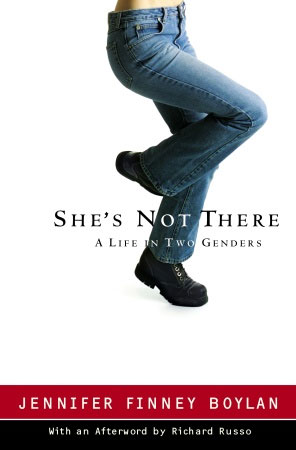
What are my X, Y, and Z?  Let's see--maybe this is a reasonable test.  You have a randomly selected pen pal or e-pal, and know nothing about each other. What information do you need to share so that you know who you're talking to?  The folk theory about identity is that for each person, there is an answer to that question.  Our  identities are built up out of things like our gender, occupation, or even where we live.  (Some Texans are identity-Texans!) Inspired by the chapter of Solomon's book on transgender, I've been reading around about that topic (I very much enjoyed She's Not There, by Jennifer Finney Boylan).  Gender, to me, seems like part of the background. I'm female, but don't think much about being female.  I wouldn't really have thought it was part of my identity, but maybe it is--it's just a part of my identity that I don't focus on much. Does my invisible interlocutor need to know my gender, so we know each other?  Maybe so.  I'm a vegetarian, but not an identity-vegetarian.  My interlocutor doesn't need to know that about me, to know who I am.  Being Jewish--maybe.  Being an atheist--maybe not.  Being a mother of two children--probably.  Being a philosopher--very probably.

A Buddhist-Stoic element of the folk theory about identity is that we shouldn't put too many features  on such a list, since doing so would make us vulnerable to the proverbial "identity crisis"--if I lose my job, and that's part of my identity, I shall have to run into the night screaming, because I no longer can say who I am. We need to put the right kinds of things on the list--not my job, but my love of the subject I teach, for example.  Some disability activists offer another type of advice--we actually shouldn't think of a disability or difference as identity-making, contrary to Solomon's subtitle. Why regard yourself or someone else as a deeply different kind of person, solely on the basis of a disability?  Turning disabilities into identities is at the root of some kinds of segregation and discrimination. 

Being more tough-minded about all this, you have to wonder:  why should any of my characteristics define who I am?  Maybe--in fact, probably-- there's no definition of who I am, in this sense, no traits, attitudes, beliefs, and so on, that make me who I am.  Maybe "identity" and "who I am" talk is folk psychology at its least salvageable.  At the risk of using the word "maybe" too many times in one post, I have to say: maybe.