5/14/10

Interspecific Love


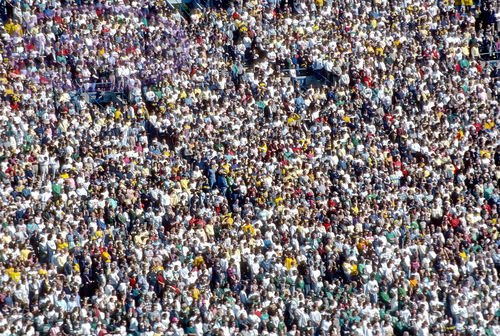
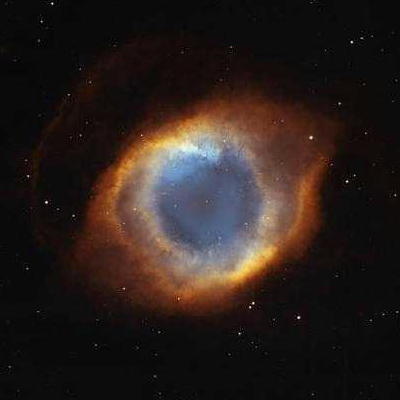
Had to grab these two pictures from Jerry Coyne's blog (which is always interesting)--interspecific love #1 and #2.  The first is a doll for Inuit kids.  The second, well, no comment.

Animal advocates will notice that the doll is made out of animal parts. Doesn't that capture the essence of the animal conundrum? People really do love animals, while also viewing them as resources. Those attitudes are hard to reconcile.

5/13/10

Radio Interview

Next week (Wednesday May 19, 1-2) I'm going to be interviewed about my book Animalkind on Think, a one hour show on KERA, the NPR radio station in Dallas.  You can listen live, call in questions, or download the podcast later on.  One thing I need to avoid is something I often do on this blog--focusing my energy on animal advocates I disagree with, like you know who, the distinguished professor from you know where.  So--pretend you are Joe Q. Listener.  What's on your mind?  What do you want me to talk about? What are you going to call in and ask me?  I was on the same show 3 years ago, talking about my first book.  If you're utterly determined, you could listen here.

Torturing Babies Just for Fun is Wrong

Sam Harris has started an interesting discussion about the nature of morality.  It's puzzling how many of his usual allies have lined up against him.  

Let us review.  Harris is really a religion critic, not an ethicist.  His foray into ethics is meant to defuse what seems to be the leading attack on atheism.  Religious moralists say there are facts about morality.  Torturing babies just for fun is wrong.  Stuff like that.  They then say there's no accounting for these facts being facts without supposing there's a supreme being. We've got to believe that God disapproves of torturing babies just for fun.

Harris's move is to attempt to do what the religious moralists think cannot be done:  account for moral facts without supposing there's a supreme being. 

It surprises me that Harris's co-non-religionists are taking him to task for this.  In terms of addressing the religious moralist, what would they have him say?  That there really aren't any facts about morality? That torturing babies for fun isn't really wrong?  What a public relations disaster!

Strategically speaking, Harris is entirely right to embrace moral realism, and attempt an explanation in non-religious terms.  Furthermore, it shouldn't be though that he's embracing something naive or preposterous. In a recent survey of the opinions of philosophers--folks who know the arguments for and against moral realism well--the majority count themselves realists! In other words, they agree with Harris that it's a fact that torturing babies just for fun is wrong.


So: Harris is taking the right position on realism vs. anti-realism, strategically speaking; and there's nothing naive or outrageous about his position.  Now let's consider the arguments for a moment.

One thing folks are throwing at him is the sheer fact of moral disagreement. Does that undermine the case for moral realism?  Surely not.  Moral disagreements involve arguments. One side may be giving terrible arguments and the other good arguments.  So reason may be on one side, not on the other.  In light of that, it would be silly to throw up your hands and say "no fact of the matter!" simply in virtue of there being disagreement.

Another worry is that moral facts wouldn't be motivating, if they did exist.  Bad guys can encounter the "fact" that it's wrong to torture babies just for fun, and start torturing babies.  To which the right answer is: so what?  The complete story about morality is not about the facts alone. It's also about moral psychology. It deals with how we come to know the facts, how they do or don't motivate us, the virtues and vices, etc. 

Harris is strategically right in adopting realism, not at all naive, and quite capable of responding to basic criticism.  Must I then be on board with everything he says?  Not necessarily.  The rest of what he says is about the exact nature of moral facts. He says they are "scientific facts."  At the very minimum, that means they are natural.  The fact that torturing babies just for fun is wrong is the fact that doing this causes...something or other. (Details to come in Harris's book.) 

Beyond that, he might be saying that moral facts are discoverable using scientific methods, but I hope he's not saying that, because it's implausible.  Some of the discovery of these facts is in the hands of ethicists and other reflective people. 

My mind is not made up about the idea that moral facts are scientific facts, but I lean toward moral realism.  It's strategically the right thing for Harris to defend, not at all a naive or outrageous position, and holds up at least under the sorts of attacks I've been reading lately.

5/12/10

The Contractarian Element in Animalkind

If you made it deep into the interior of Animalkind, you know there's a contractarian element in there. That's not the main moral framework of the book, but I need it to explain a thing or two.

Take the rescue situation I discuss in Chapter 5: after Hurricane Katrina, there were days of waiting before rescue personnel showed up. People were stranded, including the elderly and incapacitated. Dogs and other animals were stranded as well. I argue that nobody could be dismissed as "just an animal" or "just an old lady"... or whatever. All were entitled to respect and compassion.

But difficult decisions had to be made. The first buses out of New Orleans could only save a subset of those in need. I argue that it was right (not just permissible, but obligatory) to make distinctions. You couldn't save hamsters before children. There's a difference between them that it's entirely ethical to notice. In fact, it would be unethical not to notice it.

With that endorsement of taking into account differences, I wind up with a hard question. If I'm for seeing differences, why not also see the difference between healthy children and incapacitated old ladies? To be consistent, do I have to be for leaving the old ladies behind with the hamsters? I sure hope not, because my mother would kill me if I said anything like that.

This is where the soupcon of contractarianism comes in. I argue that humans are entitled to draw a line just around themselves and ignore differences inside the line. We humans fear for ourselves, our children, and our parents. We'd rather be blind to potentially relevant differences (at least, a lot of the time) than constantly take them into account. Animals don't have these kinds of concerns. So it's not arbitrary or merely "specieist" to choose stronger kinds of equality for ourselves than we do across the board. There's no triage at an emergency room, based on which lives are really more worth saving (even though there might be real differences--be honest!). Everyone gets the same public education. All this ignoring of differences within a human society is all to the good.

The same leveling in an all-animal community wouldn't make the same sense. Imagine a zoo is being evacuated. If there is room to take the chimpanzees but not the entire reptile house, ignoring differences wouldn't have the same rationale it has in the all-human case. It wouldn't benefit the animals because they don't have a human being's ability to worry about future applications of a policy or about less capable others. Even the most advantaged human has an interest in seeing the least advantaged get good treatment. The chimpanzees really don't care at all about the iguanas.  So: leveling in that context doesn't make the same sense it does for humans only.

So far, so good. But then, here's the worry. When policies have an impact on both humans and other animals, equalizing within our subgroup sounds all very well, but it can be a setback for individuals outside of it. Equalizing within the category of humans gives an infirm old lady the same rights as a normal child, so advances her to the same position as the child--ahead of, say, Buffy, the world's most amazing dog. So what starts out innocently enough (equalizing withing the human community) winds up cheating the dog out of her "natural" place in line.

What to say? Ignoring intra-human differences is right and proper from one perspective, but problematic from another. If you take both of those perspectives seriously, there's no easy solution. Leaving behind the very infirm old lady violates "the social contract." But advancing her ahead of Buffy ignores real differences in who's most worth saving.

I do want the old lady to be saved before Buffy.  So I've given the human "social contract" priority over "the natural order."  It would be wrong to say that's "just speciesist," because the human social contract has merit and doesn't apply beyond humans for good reasons. There's a moral impulse behind the decision to save the old lady, not mere prejudice in favor of my kind.  However I may just have to say there's also a moral impulse behind saving Buffy.  Perhaps this is a bonafide moral dilemma, where good reasons can be given to do two different things.

The Banned Lecture

Here's a lecture Peter Singer couldn't deliver at the University of Warsaw school of law yesterday because protesters succeeded in getting the event canceled. He delivered the lecture at an alternative location. This is a good introduction to Singer's thinking about animals and ethics.

The Banned Lecture - Peter Singer from kuba kossak on Vimeo.

5/10/10

First and Second Generation Atheists

Chris Mooney interviewed Elaine Howard Ecklund about her new book Science vs. Religion: What Scientists Really Think on Point of Inquiry last week. I was especially interested in what she said about first and second generation atheists.  I think the case for atheism is strong and I enjoy making it, but I don't have the anti-religious zeal of the new atheists. This has always puzzled me.  Why can't I get on board?  Ecklund explained that my attitude is typical of second generation atheists.  (I grew up in a Jewish but godless household--there was no God talk, but also no anti-God talk.)  The vigorously anti-religious atheists tend to be first generation, she says.  I'm not sure if this was just her impression from the hundreds of interviews she conducted, or she collected statistics on the matter. (What's wrong with Borders?  They don't have the book!)

More interesting stuff--she found that many religious scientists are reluctant to admit to their colleagues that they are religious.  Those who are religious are certainly in the minority.  She found that roughly 1/3 of scientists are agnostics and 1/3 are atheists.  Some will dismiss her because of her Templeton funding, but she didn't sound like a propagandist to me.  In fact, she observed that scientists are less religious the higher up they are in the academic hierarchy. There's more religiosity among scientists who teach at community colleges.  That's not the sort of message the Templeton crowd finds appealing.  She's found 10 times as much non-belief among scientists as there is in the general population. That doesn't boost the Templeton message that religion and science go happily together.

Dumb and Depraved

Yesterday, after reading about morality and babies, I was feeling pretty proud of the humans species.  Aren't we wonderful, being born all ready to recognize goodness and badness, fairness and unfairness?  Later on we refine what we're born with, coming to notions of equality, universal rights, and the fine points of ethics. Isn't that nice? So why is it that so many people dumb and depraved?  I ask that after reading this article about AIDS in Uganda in today's New York Times.  I don't see how anyone could read this article and not get depressed about humanity. 

5/9/10

My Scratch or the World?

Paul Bloom's article about the moral lives of babies is a nice treat for the thinking mother...and everyone else.  (Happy Mother's Day, all.)  Here's a quote from Hume that appears half-way through the article:
'Tis not contrary to reason to prefer the destruction of the whole world to the scratching of my finger.
Bloom uses the quote to make the point that babies have to have emotional reactions to good and bad, fair and unfair, before they can develop into moral adults.  Reason won't suffice to put them on that path.  "To have a genuinely moral system, in other words, some things first have to matter, and what we see in babies is the development of mattering."

OK, so other people's problems don't start to matter to us unless we have the right rudimentary responses, which appear to be innate.  If that's so, must it really be true that reason plays no role in allocating concern so the whole world's destruction matters more than a finger scratch?  Bloom actually gives a non-Humean nod to reason later in the article.
The notion at the core of any mature morality is that of impartiality. If you are asked to justify your actions, and you say, “Because I wanted to,” this is just an expression of selfish desire. But explanations like “It was my turn” or “It’s my fair share” are potentially moral, because they imply that anyone else in the same situation could have done the same. This is the sort of argument that could be convincing to a neutral observer and is at the foundation of standards of justice and law. The philosopher Peter Singer has pointed out that this notion of impartiality can be found in religious and philosophical systems of morality, from the golden rule in Christianity to the teachings of Confucius to the political philosopher John Rawls’s landmark theory of justice. This is an insight that emerges within communities of intelligent, deliberating and negotiating beings, and it can override our parochial impulses.
"Intelligent, deliberating and negotiating beings"are rational, right?  And they do not prefer the destruction of the whole world to the scratching a finger! So Hume was a little bit right, but not entirely. He was right that moral thinking doesn't get started without moral reactions, but wrong that it's compatible with reason to care more about the scratch.

Unfortunately, Bloom muddies the waters in the next paragraph--
The aspect of morality that we truly marvel at — its generality and universality — is the product of culture, not of biology. There is no need to posit divine intervention. A fully developed morality is the product of cultural development, of the accumulation of rational insight and hard-earned innovations. The morality we start off with is primitive, not merely in the obvious sense that it’s incomplete, but in the deeper sense that when individuals and societies aspire toward an enlightened morality — one in which all beings capable of reason and suffering are on an equal footing, where all people are equal — they are fighting with what children have from the get-go.
A product of culture?  Transmitted by culture, yes.  That's got to be at least partly so.  But culture doesn't make the "general" and "universal" aspect of morality, if we come to it through "rational insight." 

5/8/10

Metaethics Too Dull for Words

Sam Harris responds to criticism at the Huffington Post.  One criticism in particular caught my eye--
Many of my critics fault me for not engaging more directly with the academic literature on moral philosophy.
Part of his explanation:
I am convinced that every appearance of terms like "metaethics," "deontology," "noncognitivism," "anti-realism," "emotivism," and the like, directly increases the amount of boredom in the universe.
Fair enough.  He goes on to say...
My goal, both in speaking at conferences like TED and in writing my book, is to start a conversation that a wider audience can engage with and find helpful. Few things would make this goal harder to achieve than for me to speak and write like an academic philosopher. Of course, some discussion of philosophy is unavoidable, but my approach is to generally make an end run around many of the views and conceptual distinctions that make academic discussions of human values so inaccessible.
He's right that we need a discussion of the nature of ethics in the public square, and it can't sound like a philosophy seminar room debate.  However, it's possible for a very accessible discussion to have lots of underlying sophistication.  Philosophy needs its Richard Dawkins's and Jerry Coynes--people who are masters of the subject and good at talking about it to the public.

Where metathics is concerned, is Sam Harris that master of the subject and its communcation?  We'll see when his book comes out.  As to the rest of the Huff Po editorial, more later.

5/7/10

Hypocrisy

It seems to me we charge people with hypocrisy too quickly. The result is that we don't dare to think, for fear of winding up with a mismatch between our own beliefs and actions.   The safest way to avoid being charged with hypocrisy is just to believe in whatever we already do. 

Still. When someone has long held a position, we expect at least gradual behavioral change.  We also expect them to take into account what they actually do before becoming completely committed to that position.  It's especially absurd to become a vocal advocate for (or against) some behavior, but totally ignore your own advice. That's just going too far!

To wit--how about George Rekers, Family Research Council co-founder and anti-gay advocate who went to Europe for ten days in the company of a "rent boy"?

And, sad to say, how about Al Gore buying his fourth luxury home?  What  a carbon footprint that guy has!

In the first case, we'd want to see the man find more happy and healthy ways of being gay, and drop all the nonsensical advocacy.  In the second, the advocacy is fine, but I'm afraid the lifestyle is not.  Dear Al--You've really got to choose. Either you can promote environmental causes and greener lifestyles, or you can have lots of big, fancy houses.  You're not effective when you try to do both.

5/6/10

National Prayer Day


What, nobody told me!  I just discovered that today is prayer day. A federal judge recently ruled it's unconstitutional to have a national day of prayer, but she stayed the decision and the Obama administration decided to preserve the tradition (for now).   I'd mind prayer day if it meant compulsory praying in schools, but that's because there would be a downside for non-religious students.  I remember being faced with praying as a 9-year-old going to a London school for 6 months, and I didn't like it one bit.  But I seem to have survived 3/4 of prayer day completely unscathed. That's because nobody says you have to pray on prayer day. They don't even come through the streets with bullhorns, leading the hoards in prayer.  Prayer day is pretty much like "plant a tree" day (surely we have one). That's just a day when people who want to plant trees get together and plant trees.  Now, it does say something when the government designates a day the day for X-ing.  The designation expresses approval for the activity, for which we reason we don't have infidelity day or truancy day.  But how bad is that?  The vast majority of people do something or other they call praying.  I promise to get upset about prayer day if somebody can just give me a good reason to get upset.  So far, I just don't see it.

Wanted: Metaethicist

I'm following the debate about Sam Harris's forthcoming book (which I will certainly read) with genuine interest, but also with bewilderment.  We now have the hardest issues of metaethics being hashed out by a neuroscientist/writer, a physicist, a biologist...and various and sundry.  I keep thinking:  might it actually be helpful to call in some full-time, card-carrying metaethicists?  It's not because you have to be certified by the US Board of Metaethics to "do" metaethics, but it's kind of a complicated business, and experts actually do know a thing or two. 

Here's Sean Carroll trying to show that Sam Harris is wrong to think we can "derive ought from is." All that strikes me as a red herring.  What really matters (or should matter!) to Harris is to show that.
  1. There are objective moral truths (just like religious moralists think), and...
  2. They are "tied" to the natural world sufficiently closely that...
  3. Science, instead of religion, can illuminate what the moral truths consist of.
The question is: what's the "tie? This is a heavy duty question in metaethics.  It's heavy duty because there are so many possibilities.  Another reason why it's heavy duty is because there are parallel worries about other domains. For example, much as we want to know how morality is tethered to the natural world that science studies, we want to know the same thing about consciousness, and mentality more generally.  It pays to think about all these problems together.  Consciousness is mysterious, and ill-defined, and people disagree about it (as Carroll says about morality), and we can't logically derive psychological claims from physical claims, yet claims analogous to 1-3  are true:
  1. There are objective psychological facts (just like soul-ologists think), and...
  2. They are "tied" to the natural world sufficiently closely that...
  3. Science, instead of soul-ology, can illuminate what the psychological facts consist of.
What's the "tie" in the morality case? Maybe it's the tie we already need in the psychology case.  To make up your mind,  you would need to read and  think about a whole bunch of complicated stuff, and it's probably all going to get technical.  You might even want to call in the experts. Not me, I hasten to add.  I read only enough in this area to feel humbled by it.

5/5/10

Cultivating Revulsion

Rhys Southan has an awfully interesting post here about how some vegans cultivate revulsion.  I'm of a different school of thought--more like the married people he talks about.  Infidelity isn't allowed, but that doesn't mean other men are disgusting.  Likewise, I don't see meat as disgusting or unappetizing--at least, not deliberately.  (After 17 years of being a vegetarian, a rare steak does look weird, but I'm pretty sure it would taste good.)  Many vegans try to see animal products as revolting. At some vegan blogs, they call milk a "glass of pus" and Rhys says PETA refers to eggs as "chicken periods." It seems to me that all sorts of bodily processes will start to seem disgusting if you go that route.  Breastfeeding could seem revolting, if you get yourself to associate milk and pus. If chicken periods are disgusting, are human periods disgusting? Think about pregnancy--good heavens, all those months cuddled up with a placenta!  Eww!  To maintain resolve about not eating meat, I have called to mind slaughterhouse images and chickens crammed into cages and  what cattle are fed at feedlots. Ugh.  It's another thing to cultivate revulsion about animal bodies themselves. I worry that there are attitudes associated with super-pure veganism that are not desirable--and that's why I read Rhys's blog (despite its "not what I think" name).  It's a wickedly satirical expose of those dubious attitudes.  I don't think for a minute he's lacking ethical concern for animals.  He's pulled in multiple directions, and that's what makes his writing interesting.

Hazards of Green Living

I'm a couple of months late to the party, but here's an interesting Newsweek editorial about "the halo effect."  Sharon Begley argues that a green lifestyle is something to watch out for because greener living could result in less green activism--and it's the activism that really matters.  We need to demand climate change legislation, not just change our lightbulbs, recycle newspaper, etc.

The halo effect is what happens when people do something good and then think their quota has been met--so do something less good afterward.  Begley cites a clever study about green shopping.  156 students from a psychology class were divided into four groups.   The "green look" group looked around at an online store that mostly sold green living supplies.  The "regular look" group looked around at a non-green store.  The "green buy" group bought at the online green store, and the "regular buy" bought at the other store.

After that, each subject played the Dictator game. In this game, the player has to share $6 with a partner, splitting the total any way they like.  The only catch is that the partner can veto the split, in which case nobody gets anything. 

The "green look" group played the Dictator game more equitably than any other group, but here was the big surprise (to me, anyway):  the "green buy" group played the least equitably. The researchers speculated that people try to uphold their self-image as ethical people.  If they do something they see as good, they feel they've met their quota, so can slacken off.

Moral of the story--  If you're doing lots and lots of good green deeds day in and day out, that may dampen your motivation to work toward green goals in more substantive and effective ways.  No, she's not saying we shouldn't change our lifestyles. She's just saying "watch out for the halo effect."  I rather doubt this is problem for people with strong, deep-seated concerns about the environment, but for the general population--yes. Too much green living (most of which does not substantially reduce a person's ecological footprint) might translate into complacency.

5/3/10

36 Arguments for the Existence of God

I decided to do something else for the next issue of TPM, so here's my review of 36 Arguments (written a while back)--

Gods and Goddesses

Feb. 10. Rebecca Goldstein’s new novel arrives. I start with the 50-page appendix: 36 arguments for the existence of God, written up precisely, and followed by objections. You can get the appendix for free on the book’s website.

Goldstein is a Princeton-educated philosopher and an exceptionally talented novelist as well. She’s the author of The Mind Body Problem (1993), several other novels, and non-fiction works about Godel and Spinoza. Plus, she’s the recipient of all kinds of fellowships and prizes. If I can get my envy under control, I think I’m going to love this book.

Feb 12. I do love this book! It starts--

“Something shifted, something so immense you could call it the world./Call it the world./The world shifted, catching lots of smart people off guard, churning up issues you had thought had settled forever beneath the earth’s crust.”

The main character is Cass Seltzer, famous atheist and best-selling author of The Varieties of Religious Illusion. He’s been featured in Time Magazine and now, as the novel opens, he’s basking in the joyous knowledge that he’s been offered a job at Harvard and he’s in love with Lucinda Mandelbaum—a savagely brilliant and stunningly beautiful colleague known as “the goddess of game theory.” He can hardly wait for her to return from a conference in California where she’s trying to burnish her already stellar reputation.

Cass’s bestseller has a foil cover just like The God Delusion, and he’s just as notorious as Richard Dawkins, but there the similarities end. He’s been catapulted into the role of Chief Atheist even though it was never his intention to disprove the existence of God. In fact, the 36 arguments-cum-refutations (now Goldstein’s appendix) were just an appendix to his book. His real point was “how irrelevant the belief in God can be to religious experience—so irrelevant that the emotional structure of religious experiences can be transplanted to completely godless contexts with little of the impact lost.” He’s proud to be known as the atheist with a soul.

It’s odd, then, that he’s romantically connected with the super-analytical and not so soulful Lucinda Mandelbaum. She’s hard and technical while he’s soft and intuitive; she’s intensely competitive while he’s laid back. Goldstein’s portrait of Mandelbaum’s antics at a departmental colloquium is worth the price of the book. She’s a masterful satirist of academia and high-octane publishing, worlds she knows extremely well, both first hand, and as the wife of ne plus ultra Harvard professor and writer Steven Pinker. I haven’t laughed so hard about academia since reading Zadie Smith’s novel On Beauty.

Not only does Goldstein have academic mannerisms right on the button, but she also perfectly captures the ambitions and rivalries that fill the heads of top of the line professors and aspiring graduate students. On the other hand, the book is not all mockery. The book’s characters live in their heads. Almost every scene is a conversation about ideas, a debate, a reverie about ultimate issues.

Feb. 13. Page 59. The book flashes back 20 years to Cass’s relationship with a puffed up super-academic by the name of Jonas Elijah Klapper and a zany anthropologist girlfriend named Roz. Note to self: hold on tight. This is slightly tedious material, but we’ve got to have the backstory. Goldstein will surely come back to the present. Be patient.

Feb 23. Page 275. Still trying to be patient. It turns out most of “36 Arguments” is backstory. Cass and Klapper and Roz (20 years ago) get to know the Valdeners, a Hasidic community to which Cass has a weak connection through his mother. The novel becomes a sort of field guide to the ways of Hasidic Jews. Thus we learn how it is that Seltzer came to be the atheist with a soul. Through his experience with the Valdeners, he apparently discovers that there is joy and meaning in the religious life even for a participant who doesn’t believe. So these couple of hundred pages are thematically integral to the book, but dramatically gripping? Not so very.

Maybe I’ve just read too much lately about orthodox Jews vs. atheists. Zoe Heller uses them as a foil to atheism in The Believers, but with an interesting difference. Goldstein likes the atheists in her book, and (I was happy to see) lets atheism win in a face off with theism near the end of the book. But she also likes believers. Heller’s atheists are shrill and strident and her orthodox believers anti-rational, exclusive, and repressive. Goldstein brings atheists and believers closer together, allowing them the possibility of mutual understanding.

The message is convincing and heartening, but … bring back Lucinda Mandelbaum, the goddess of game theory! Goldstein has created a magnificent character and then stashed her away for 200 pages.

Feb 25. Page 288. Hallelujah! Lucinda is back from the conference, and gloriously so. Another key story, about the son of the Valdener rabbi—a mathematical genius who emerges for a while from the cocoon of Hasidism—comes to a conclusion as well.

“To be human is to inhabit our contradictions,” says Goldstein on the final page. If unevenly entertaining, I found this book entirely convincing.

5/1/10

Do Animals Have a Right to Privacy?

Dr. Brett Mills of the University of East Anglia doesn't seem to have a friend in the world.  He's questioned whether documentary film makers should stick their cameras into the private space of wild animals.  The commenters at the Daily Mail all seem to think he's a "nutter" and both people who sent me the link (thank you!) added a derisive comment.  The article even quotes a PETA spokesman as saying "no harm, no foul." So how about it?

I briefly talk about the issue in my book--
Part of the difficulty of simply stating what can and can’t be done to animals is that respectfulness has fuzzy boundaries. .... A friend of mine recently remarked that birdwatchers are a bit like stalkers, the way they pursue birds and spy on them with binoculars. Stalking people is disrespectful, but what about stalking birds? Must birdwatchers think hard about their hobby? To produce the marvelous series The Life of Mammals, David Attenborough’s film crews surreptitiously invaded the space of animals in the wild. In one particularly fascinating segment, they drilled down into the burrow of a platypus – an egg-laying mammal – and inserted a periscope-like camera, giving viewers a chance to see a drop of milk emerge from the mother's skin and a blind, wriggling tiny newborn. It’s fascinating footage, but does this amount to a disrespectful violation of the private space of these animals?
Is "no" really, obviously, the right answer?  Here's the footage (about 3:15)--


David Attenborough (a hero in my house) is warm and wonderful, but drilling into that burrow does strike me as overbearing, intrusive, certainly questionable.  But how can that be an appropriate reaction if the platypus had no awareness of the probe and wasn't hurt?

Things to think about before trying to say:
  • The Truman Show.  People inside the bubble aren't aware that they are on camera, and aren't hurt by it.Yet the audience on the outside are doing something wrong.
  • Babies.  Suppose a psychologist wants 24 hour footage of an infant.  Should I allow a camera to trail my child, assuming the footage will be anonymous and the child will never find out?
  • More about babies.  Why not blow off some steam while taking care of your infant? You could address him as "you little asshole" or worse.  The kid won't be aware of it, so "no harm, no foul"?
  • The severely retarded.  Why not set up a webcam so weirdos can watch them take baths, and the like?  They'll never know it, so "no harm, no foul"?
None of these cases is exactly analogous, but they do challenge the idea that the documentarian's invisibility is completely exculpatory.

OK, so what's wrong with drilling into the burrow of a platypus?   I would say this:  the platypus has a "subjectivity" of her own--a point of view, a set of experiences.  To drill in and watch is to treat this "subject" purely as an "object." As an object of fascination and wonder, so it's not all bad.  But it's dubious.

In the article, Dr. Mills says, "We can never really know if animals are giving consent, but they often do engage in forms of behaviour which suggest they'd rather not encounter humans, such as running away or building a burrow. The question constantly posed by wildlife documentaries is how animals should be filmed  -  they never ask whether animals should be filmed at all."
The platypus enters the burrow for privacy and protection.  It's not anthropomorphic or far-fetched to think that's what she prefers.  To intrude and watch is therefore quite clearly to act on your own preferences and to flout the animal's.  As in, "I don't care if you want to be watched or not.  I can, so I will." The filmmaker is insisting on his own point of view, instead of empathizing with the animal's.

But is it really wrong, really disrespectful?  I did leave this as an open question in my book. I didn't say Yes, but I think it's wrong to laugh off Dr. Mills, as if the answer were obviously No.

P.S.  What if there are invisible alien intelligences drifting around, completely impossible for us to detect? What if there's an invisible camera pointed at your face right now, and your image is being beamed to billions of aliens, scattered across the universe? And what if they are all thinking that you're weird looking, what with your bizarre nasal protrusion, the tongue that occasionally protrudes from your mouth, your glassy eyes, etc.  Isn't there something wrong with what they're doing?

4/29/10

Animal, The Restaurant

A couple of nights ago I had a dream about a restaurant where a whole animal, fur and all, was curled up as if asleep in a giant frying pan.  It's no mystery why I had the dream--my bedtime reading was an article in the New Yorker about an L.A. restaurant called "Animal."  Not "Jim's Steakhouse" or some such. The point of the name is to shout out "we turn animals into food."  Of course, most restaurants do that, but this one is proud of the fact.

And boy do they ever--turn animals into food.  Here's a meal ordered by Mario Batali, another restaurant owner--five pork bellies, the "poutine" (huh?), two pig ears, two gnocchi, two sweetbreads, two quail, two fluke,  two crispy rabbit legs, two pork ribs, two flat irons medium rare/rare, two veal breasts, "and no fuckin' vegetables."

What else does the restaurant serve?  There's "lamb-tongue ravioli, lamb-heart paprikas, deviled lamb kidneys, veal brains grenobloise, " and recently the chefs have been experimenting with veal testicles.  They seem to be a sensitive couple of guys.  Here's one of them, waxing poetic about tofu--

"I had this weird thing last night" Dotolo said recently.  What, did he have sex with his wife?  No. "I was, like, eating tofu, and I was, like, thinking about how much it reminded me of, like, bone marrow and, like, brains and, like, that weird texture--like, soft, a little bit gelatinous.  But the flavor of tofu is, like, so yelchth.  I'll think about that now for, like, maybe a year befire I think about something to do with it. I think it'd be fuckin' hilarious to do tofu at Animal, just because it throws people off so much."

Hilarious!  Or maybe even, like, fuckin' hilarous!

Earlier that day, I had read a post about food at Jerry Coyne's blog.  It was an interesting reminder of my former self.  That used to be me--the attraction to super-authentic food like barbecue, and szechuan cookery, the whole thing. In fact, I grew up eating the sort of stuff Mario had for dinner--the pigs ears, sweetbreads, quail, rabbit, everything. In "real world" terms, there was no difference.  But there was a difference of attitude.  We never relished the idea that we were turning real live animals into food. To tell the truth, the animals were "out of sight, out of mind." The only thing I couldn't get into was tongue.  When you see a tongue lying on a plate it's impossible not to think of the mouth that used to house the tongue.

I am repulsed by Animal and it's ostentatious animal-to-food conversions, but feel a bit nostalgic about my former self's approach to food.  Having food rules is particularly a problem when traveling.  I will be visiting Italy soon, and hate to miss the local food. And yet, and yet.  Here's Barbara King, talking about the problem of carnivorous Italy.  And I'm just a vegetarian. A vegan would miss out on far more. Here's an ex-vegan talking about how the travel problem became a deal-breaker.
Bologna, Italy (known for its amazing food): I convinced my partner to go to the only vegetarian restaurant I could find out about in all of northwestern Italy. It was a total throwback to the 1970s. A tofu sausage rolling around on a plate with some boiled vegetables and alfalfa sprouts (this was listed as the hot dog option). I think the only thing that tasted good was the mustard.
Levanto, Italy: We were staying at a beautiful agriturismo olive farm up in the hills above the town. The woman who owned the farm came by our patio in the morning while I was having coffee to offer us fresh eggs, still warm from her hens. She had this lovely smile on her face and when I had to turn them down, her face just dropped and I felt like such an ungrateful asshole. We then walked to the horrid supermarket nearby to buy stuff for breakfast. How I couldn’t see the lunacy of this at the time completely baffles me now.

I wouldn't set foot in Animal. I'm not going back to being my former self, despite some nostalgia. But I don't think I want to become a person who turns down fresh eggs at an Italian olive farm.   I'm not sure I can defend that, philosophically, but that's the way it is.

*

What? I surfed over to the Animal website, and couldn't believe my eyes.

We Live in A Beautiful World (2)


More "Best Nature Photos of All Time " here. 

Oklahoma's Abortion Law

We interrupt regular programming to bring you this important story.  I couldn't be more appalled by the new abortion law just passed in Oklahoma.   Under the new law, all women must have sonograms before abortions--no exceptions.  The doctor must show the woman the screen and describe whatever heartbeat, organs, limbs, etc., they see there.  (On the other hand, women can't sue doctors if they don't mention abnormalities they may see.)  It's one thing to offer women the option of a sonogram. To require it and offer unrequested information is a completely unacceptable violation of a woman's privacy and autonomy.  Appalling.

4/27/10

When Everyone Disagrees

I have various beliefs that make me unusual.  I think there's a problem with killing animals for food, and as many as 97% of people do just that, without batting an eyelash.  I don't believe in any deities, and a large majority of human beings do.  So... what?  What does it tell me when so many people disagree?

I could adopt a heroic view--my views are the ones that count.  I should soldier on and ignore what the masses believe.  I don't see how this sort of indifference could make any sense.  It is at least somewhat probative that almost everyone believes X. The fact that most people eat meat and believe in God is something I have to come to terms with. 

I could also adopt a conformist position.  The 97% who think animals = food can't be wrong.  The vast majority who believe in deities can't be wrong.  This goes too far.  The human race just ain't that perfectly bright.  Example I read about in the paper today:  the good people of Qatar evidently marry their cousins, and all sorts of birth abnormalities result.  They know there's this connection, but, well, it's a tradition. You just can't question it.  It wouldn't be wise to submissively follow the human herd wherever it's heading.

So--no heroism, no conformism.  Then what?  There are still multiple options.  How about explain or conform?  If you take that approach, you regard the super-majority's view as the default. If you can't explain why you're in a superior position to know, then you should at least seriously consider adopting the dominant view.

I think I could adopt that approach, and stick to my guns. It's not that I'm smarter than everyone else.  Lots of super-smart people are in the super-majority on gods and animals.  So how can I explain how it happens that I believe not-X and they all believe X?  One way to explain it is to identify fantastic arguments I have in favor of not-X.  Perhaps they haven't heard of these fantastic arguments.  Well, up to a point, that's true. (What about the people who have heard of my fantastic arguments?  Should it matter to me if they don't find them fantastic?)

I can also point to traditions and biases.  Just like the people of Qatar can't stop marrying their cousins because that way of life feels normal to them, there's a normalcy factor with gods and animals.  People don't want to be wrenched away from the way of life that feels comfortable to them.  Plus, people in the super-majority know they're in the super-majority. That's extemely reinforcing.

I can explain my superior vantage point relative to at least a lot of people, so "explain or conform" may let me stick to my guns, but it nevertheless doesn't seem quite right. For one thing, it's too close to the conformist position.   It gives too much weight to the fact that X is something everyone believes.  Also, it allows members of the super-majority to go on unreflectively believing what everyone else believes, since most of them are not in a superior position, relative to their confreres.

Back to the heroic view? I don't think so. It can't mean nothing that everyone else believes differently.  I'm writing an essay for The Philosopher's Magazine about disagreement, and finding it a puzzling thing.

4/24/10

Do Atheists Need More Evidence?

Michael Antony has a thought provoking article in the new issue of Philosophy Now.  He says atheists don't play fair.  They accuse theists of lacking evidence, but "tend not to worry much about providing evidence" for atheism.  Antony looks at five possible defenses of the idea that theism requires more evidence than atheism and finds them all wanting.  

If one of the defenses appeals to me, it's #5: absence of evidence is evidence of absence (the "Hanson-Scriven Thesis" so "HST").   This would mean that atheists don't have to come up with their own evidence that God does not exist, if theists lack evidence that God does exist.

Sounds pretty good.  What's the problem?  First Antony says theists don't lack evidence. At the very least they have weak evidence--
religious experience, the fine-tuning of physical laws and constants, the apparent contingency of the universe, etc. These and other points, although far from decisive, and although explicable in other ways, could conceivably be mentioned in a compelling argument for the existence of a divine being.
So for the HST to help atheists it must be construed as saying that absence of strong (as well as weak) evidence is evidence of absence.  But that, he argues, is implausible.
Consider the claim that earthworms have a primitive form of consciousness. There is little evidence for this, certainly no strong evidence. Nevertheless, many consciousness researchers believe it (with varying degrees of confidence).... Or consider string theory. Again, there is nothing that could properly be called strong evidence for it, yet many physicists believe it. Such examples could be multiplied. Yet if we were to take HST seriously, given that there’s no strong evidence for any of the above propositions, we would rationally have to conclude that the negations of the propositions are true: that earthworms are not conscious .... and that string theory is false. But that is absurd!
As Antony points out, HST is typically asserted in connection with a bunch of ridiculous entities--the Tooth Fairy, the Flying Spaghetti Monster, the teapot orbiting the sun. That, he thinks, steers atheists wrong.
It is now easy to see where Hanson and the New Atheists go wrong with their example-based defense of HST: they select examples that conform with HST and ignore cases of the sort just offered that conflict with it.
OK, he convinced me.  HST can't be affirmed if you consider the whole spectrum of cases.  But maybe there's a narrower principle something like HST that's correct.  What's correct is a principle specifically about "the ridiculous." Absence of evidence for the ridiculous is evidence of absence. But then Antony balks at the suggestion that the God hypothesis is ridiculous.  He thinks there's no reason why "religious belief, because it lacks strong evidence, must be judged to be just as ridiculous as the Tooth Fairy or goblins."

Sure, the sheer lack of strong evidence doesn't make the God hypothesis  ridiculous.   It could still be ridiculous because .... well, because why? Antony is right to press atheists on this question.

Take just one aspect of the God hypothesis--the notion of a disembodied mind.  It's one thing to be uncertain whether the nervous systems of worms can or can't support consciousness.  Both views are credible. But must I really take seriously the possibility of disembodied mind--God?   What a bizarre idea. It sure does seem odd to think a disembodied mind could do so much--like create the universe, perform miracles, and do all that's normally attributed to God. If there's no strong evidence for something as odd as that isn't it fair to say there's no such thing?

Maybe this is just to say there's a presumption against very weird things being true, and it's up to people who believe in them to come up with very good reasons.  Skeptics about these things get to disbelieve more lazily than believers can believe. Something of the sort strikes me as true, though I can't say I know how to say it more precisely.  Ridiculous, weird, odd, bizarre.  There's got to be a better way.

There's lots more in the article. Have a look!

4/22/10

More About Solar

Having now finished Solar, and the Walter Kirn review in Sunday's New York Times, I've made two decisions; I must read more Ian McEwan, and I must never read another review by Walter Kirn.  Not only are his opinions about the book wildly off the mark, but he's a plot ruiner extraordinaire.  Truly, I'm baffled.

Anyhow, I loved the book.  The main character is one Michael Beard, Nobel Prize winner in physics and now, 20 years and 5 marriages later, an accidental climate scientist.  The delicious fun of the book is that Beard is so comically appalling.  His womanizing, his over-eating, his cynicism...everything makes him abominable, but somehow not despicable. The book is about his misadventures in love, green technology, crime and punishment, overeating, overdrinking.  This is the sort of closely observed dark comedy I just love.

SPOILER ALERT!

Stop reading now if you haven't read the book and plan to, because I've got to say something about the last two pages.

Not so satisfying. It's not just that the plot goes awry, but the novel winds up saying the wrong thing.  Unless you are determined to hear no message at all, the book seems to say that personal self-control is key to getting global warming under control.  McEwan won't let his gluttonous, thoughtless, amoral "hero" pull off a technological feat that could save the world.  Why not?  Bad people don't do good things?  But they do!

Maybe we're supposed to take this a little more metaphorically.  OK, green technology geniuses can be slobs and womanizers. What he's trying to say is that we have to get our appetites under control, if we're going to solve the problem of global warming.  Is Michael Beard us? I'm afraid that just doesn't work.  He's much too abominable for that. And the appetites theory of our environmental crisis doesn't seem very insightful anyway.  We're not really, as individuals, "too" greedy. There are just too many of us, so our collective ecological footprint is too big.  It's not because of greed that our cars produce greenhouse gases--they just do, because of the sort of cars and fuel we use.

Solar needed another ending--more "organic," less punitive, less message-y.  I want to know what really happened in the end (come on, what about Darlene and Melissa?) not what had to happen to teach us all about the hazards of over-consumption.  Other that--a really enjoyable book, and interesting too.

We Live in a Beautiful World

Why are we such a destructive species?  This being Earth Day, and that being the question of the week for my environmental ethics class, I thought I'd ask. In a well-known article, Lynn White says that what's most destructive is western science and technology, which has roots in Christianity.  The Judeo-Christian view is that humans are uniquely endowed with "spirit" and "made in the image of God."  The rest of nature was just created for our use; and our proper position is to rule and dominate. (I don't think that's really the message of Genesis, but never mind--in time, that did come to be the dominant Christian view.)

What's the better way of seeing things?  White says: Animism, pan-psychism--in the Christian form that's culturally accessible to us.  White likes St. Francis:
All Praise be yours, my Lord, through Sister Moon
and the stars; in the heavens you have made them,
bright, and precious, and fair.
All praise be yours, my Lord,
through Brothers wind and air, and fair and stormy,
all the weather's moods,
by which you cherish all that you have made.
All praise be yours, my Lord, through Sister Water,
so useful, humble, precious and pure.
All praise be yours, my Lord, through Brother Fire,
through whom you brighten up the night.
How beautiful is he, how cheerful!
Full of power and strength.
All praise be yours, my Lord, through our Sister
Mother Earth, who sustains us and governs us,
and produces various fruits with colored flowers and herbs. 
Pretty, no?  A nice poem for Earth Day.  I wonder, though, what happens when people get serious about their animism, instead of just deploying it as a metaphor.  It's harmless enough to think of the moon as alive, and as your sister.  If we thought of earth as mother, we might be more protective of her.  But animists think everything is really animated.  Like the volcano with the most unpronounceable name--


If we thought "Eyja" was Sister Eyja, I think we'd have to wonder what she was so mad about.  Since we can't possibly find out, we'd be free to project anything we liked onto her fiery volcanic mind.  Perhaps what would soothe her is for 1000 Tea Party members to be thrown in her craw.  Others would say she's only hungry for one tall, dark, and handsome American president.

Oh come on, it's just a volcano. Volcanoes aren't people.  The world is not imbued, through and through, with mentality.  We don't need to live in fear of what volcanoes want from us.  There is a related attitude, though, that isn't daft at all.  Nature is awesome, intricate, beautiful, worthy of respect.  Which means we ought to be doing a great deal differently.

Today's a good day to listen to the Coldplay song "Don't Panic"--because we do live in a beautiful world.

4/21/10

Solar

I'm 150 pages into Ian McEwen's new novel Solar, and I love it.  It's laugh-out-loud funny, grippingly entertaining, timely, thought-provoking, and beautifully written.  Thanks to New York Times reviewer Walter Kirn, though, I've been reading it with a question mark in my head. No, I don't have a question about McEwen, I have a question about Kirn.  What's with him? And also: who is he?  As I rummage my mind for what he's written (besides a lot of book reviews), all that comes to mind is a children's book called Walter the Farting Dog, and Walter Kirn didn't write it.  That's how stupid his review is.

Now, a confession. I just read the first paragraph, because I hate the way so many book reviewers spoil books.  Most begin with a synopsis that gives away 90% of the plot. The idea seems to be that the sophisticated reader isn't interested in suspense.  Or perhaps what reviewers think is that there's enough suspense left if you don't know exactly what happens in the last 25 pages.  In any event, I wasn't going to let Walter ruin a book I was looking forward to reading.  As for the first paragraph--here it is:
According to the perverse aesthetics of artistic guilty pleasure, certain books and movies are so bad — so crudely conceived, despicably motivated and atrociously executed — that they’re actually rather good. “Solar,” the new novel by Ian McEwan, is just the opposite: a book so good — so ingeniously designed, irreproachably high-minded and skillfully brought off — that it’s actually quite bad. Instead of being awful yet absorbing, it’s impeccable yet numbing, achieving the sort of superbly wrought inertia of a Romanesque cathedral. There’s so little wrong with it that there’s nothing particularly right about it, either. It’s impressive to behold but something of a virtuous pain to read.
Completely baffling. My question for today is what time can I respectably set aside my official duties and read the last 100 pages of this delicious novel?  (And yes, I'll go back to the review, more or less as a guilty pleasure. Some reviews are so crudely conceived, despicably motivated and atrociously executed that they're actually rather good.)