Frank Bruni is really, really brilliant today.
WE no longer have news. We have springboards for commentary. We have cues for Tweets.
Something
happens, and before the facts are even settled, the morals are deduced
and the lessons drawn. The story is absorbed into agendas. Everyone has a
preferred take on it, a particular use for it. And as one person after
another posits its real significance, the discussion travels so far from
what set it in motion that the truth — the knowable, verifiable truth —
is left in the dust.
I hope I am not guilty as charged. I don't have an agenda or a use for the Santa Barbara tragedy ... as far as I know. I wrote the post below yesterday. Maybe, after reading Bruni, I would have thought "enough already" and dropped the subject. Maybe I'm thinking about the feminist debate about Rodger so much because it's just too painful to think about the parents mourning their children. That's too close to home for someone soon to send children off to college. So--mea culpa, but I hate to throw out this post after putting together all the data.
***
Salon editor Joan Walsh
observes, "The widespread recognition that Elliot Rodger’s killing spree was the
tragic result of misogyny and male entitlement has been a little bit
surprising, and encouraging." So now it's all settled--the guy was a misogynist pig, done!
And here's a line of argument I've seen over and over again, in various quarters. When racists attack people, we blame racism. When homophobes attack people we blame homophobia. Why is it that we can't just go ahead and blame misogyny, in this case? We must be willing to give a free pass to misogynists! The horror!
But no. I'm reluctant to accept Walsh's diagnosis because misogyny comes into the picture very late in Rodger's manifesto, when all the antecedents of his rampage have already been festering for 10 years. The antecedents are hatred, resentment, misery, loneliness, a sense of unfairness, rage (what you might call being "emotionally disturbed" as opposed to "mentally ill"--we don't know yet about the latter). Until late in his short life, his hatred doesn't take a specifically misogynistic form.
Of course, not every feeling of hatred for girls or women is misogyny, if you use the term correctly. Misogyny is not just hatred of women. If you hate popular boys and attractive girls, the second half of your hatred doesn't add up to misogyny; the first half isn't misandry. Misogynists both hate girls or women
and hate them for particular sorts of biased, gender-related reasons. They hate then
because of actual or perceived feminine traits toward which they feel antipathy. For example, a misogynist might hate women for being dirty (menstruation!) or for perceived inferiority (dumb, emotional!). If you hate girls for not liking you, that's not misogyny any more than hating boys for not liking you is misandry.
What I'm going to show is that misogyny makes a very late appearance in
the manifesto, after dozens of expressions of revolting but non-misogynistic hatred.
Age 11 (p. 28) - hatred toward other boys
Age 11 (p. 31) - hatred toward cool kids
Age 11 (p. 32) - hatred toward girls
Age 12 (p. 38) - hatred toward boys
Age 13 (p. 42) - hatred toward girls
Age 14 (p. 45) - hatred toward peers who bully him
Age 14 (p. 46) - hatred toward peers who bully him
Age 14 (p. 47) - hatred toward boys
Age 15 (p. 48) - hatred toward boys and girls
Age 16 (p. 53) - hatred toward boys
Age 17 (p. 56) - hatred toward boys; hatred toward people who have sex
Age 17 (p. 57) - hatred toward couples
Age 18 (p. 65) - hatred toward couples
Age 18 (p. 65) - hatred toward couples
Age 18 (p. 70) - hatred toward couples
Age 19 (p. 72) - hatred toward boys
Age 19 (p. 75) - hatred toward boys
Age 19 (p. 80) - hatred toward boys
Age 19 (p. 81) - hatred toward boys
Age 19 (p. 82) - hatred toward boys and women
Age 19 (p. 83) - hatred toward everyone
Age 19 (p. 84) - hatred toward boys, couples, girls
Now we come to misogyny. He starts expressing antipathy toward women for perceived traits.
Age 19 (p. 84) - misogynistic hatred toward women
But mostly the rest of the manifesto contains the same sorts of thoughts and feelings as before.
Age 19 (p. 87) - hatred toward couples
Now the first acts of violence take place. They are directed at a couple, not only at a woman.
Age 19 (p. 87) - hatred toward couples
The rest of the manifesto
mostly contains the sort of hateful talk that's predominated so far, not the explicit misogyny on p. 84. He starts to plan for the "Day of Retribution" and buys himself guns. Close to the end, there are a few more misogynistic fulminations, alongside plans to flay people, chop their heads off, and so on.
Age 21 (p. 111) - misogynistic hatred of women
Age 22 (p. 136) - misogynistic hatred of women
Even though the misogynistic passages are a small minority of the hateful passages, you could say they are critical. You could say that if it weren't for Rodger's theories about female inferiority, he wouldn't have come up with his plan for the Day of Retribution. Or he wouldn't have carried them out. That's not out of the question, I guess.
But if you read this manifesto, what seems much more overwhelming is the overall pattern of hate, envy, loneliness, resentment, sadness, hopelessness, craving for status, humiliation, despair, etc. So it is baffling to me that we've settled on misogyny as key to understanding why this happened.
Maybe the focus on misogyny is helpful, in so far as there
are other misogynists out there rallying at websites. We ought to be on the alert for them. We should be concerned about what they have done or may do to women. Obviously we should condemn misogyny and recognize it's not such a rare thing. But the one who went on the rampage is this one man, who left a very extensive record of his state of mind. What's in that record is mostly other things, not misogyny. Shouldn't we pay attention?
***
But then
what Bruni said. I think he's right and so I'm going to stop writing about this subject!

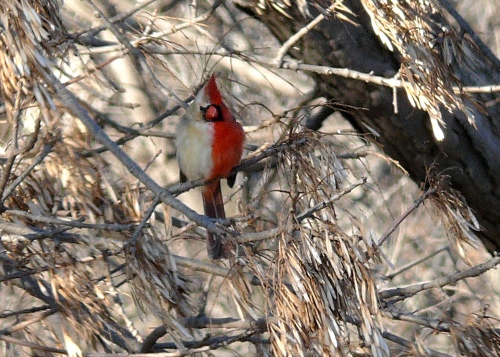
 He does say "for starters" too much. And there's a funny argument about a bird on pg. 13. "Research in laboratory animals, for starters, has demonstrated large, innate, genetically determined sex differences in the brain." Given the sweeping scope of the claim, it's odd for the first item of support to be one bird. UCLA scientists found this bird. (Where? When? Are there others? Who knows?) The bird was a "lateral gynandromorphic hermaphrodite." Wow. Male on one side, female on the other. On the left, an ovary, on the right, a testicle. On the left, female plumage, on the right, male plumage.