3/30/11

My Bookshelf

Just finished... The Evolution of Bruno Littlemore, by Benjamin Hale.  Ape makes journey from animality to humanity.  So funny, so incredibly good. This novel has many of the things I particularly like in fiction.  A distinctive, compelling voice (cf. Holden Caufield).  Suspension of disbelief (cf. Kazuo Ishuguro, Never Let Me Go).   Lots of philosophical content, without any didactic tone  (cf. Joshua Ferris -  Then We Came to the End).  Animal characters that actually work, which is rare (cf. Paul Auster, Timbuktu).  I'm writing my next TPM column about the book, so a complete review is in the works.

Just started... How to Live: Or A Life of Montaigne in One Question and Twenty Attempts at an Answer, by Sarah Bakewell.  Can you tell a book by its cover?  Apparently not, because I think this book has a remarkably awful cover, yet the first couple of chapters are a delight.  By the end I expect to know how to live.

Next up... Motherhood: The Birth of Wisdom ed. by Sheila Lintott. This is from Wiley-Blackwell's Philosophy for Everyone series. The chapter titles really grab me--"How many Experts Does it Take to Raise a Child?  Mothering and the Quest for Certainty."  Indeed. I've often wondered whether mothers (and fathers) should trust their instincts, and what they should think when the experts say 10 different things.  "Pro-Choice Philosopher Has Baby: Reflections on Fetal Life."  Hey, me too! Following fetal development up close and personal does make you think.  "A Face Only a Mother Could Love?  On Maternal Assessments of Infant Beauty" Ha!  Everyone else does seem biased.  Me on the other hand...I happen to have the world's best looking kids.  "Natural Childbirth is for the Birds."  Hope the essay says exactly that, because (frankly) that's my view.  Full report coming when I'm done.

3/26/11

Should We Care Whether Others Believe in God?

Here's Ronald Lindsay, president of the Center for Inquiry, arguing that the organization shouldn't include the spread of atheism as one of its goals. The presumption (he seems to say) is that we shouldn't work to eradicate other people's false beliefs. 
Why should we care whether others believe in a god or other supernatural beings? Because these beliefs are false? Yes, they are false, but most people, including humanists, have a large number of false beliefs. Mistaken beliefs do not typically trigger passionate, prolonged efforts to persuade the person holding the erroneous belief that s/he is incorrect. Think of all the false beliefs each of us has about history, physics, biology, and whether our hair is thinning.
To make "passionate, prolonged efforts to persuade" we'd have to think holding the false belief is harmful.
So if we are concerned about false beliefs that the religious have about the supernatural, presumably it must be because of the significant harmful consequences that follow from holding such mistaken beliefs.
The harm ought to be either very serious, or other-regarding:
With respect to self-regarding harmful behavior, I do not see this as sufficient justification for intervention, except perhaps in the case of imminent serious harm, for example, a person who is about to commit suicide because s/he believes it is the only way to meet God. Sure, religion produces false hopes and wastes a person’s time, but so do other mistaken beliefs. If the only harmful consequences from religious belief were those affecting the believer, it would constitute unjustified paternalism to devote significant time and effort to persuade the religious to give up their beliefs. Atheists are not in the business of saving souls.
Even when religious beliefs cause harm to others, he's reluctant to interfere with the beliefs themselves--
It is not so much religious belief in and of itself that is of concern to us, but the mindset of all too many of the religious that their doctrines should be reflected in the laws and regulations that govern us all, and, furthermore that they need not provide any justification for their support for a particular public policy other than “God says so.” If we are to have a truly democratic society, we need most of the people to break free of this mindset.
For some, that may mean they must first stop believing in the supernatural, because their religion so pervades their thinking and their life that they cannot conceive of reasoning about ethics and policy matters in secular terms until they stop believing in spirits. Of course, these are precisely the religious individuals who are the most difficult to reason with, so the odds of persuading them that their religious beliefs are unfounded are low—but the probability is not zero.
So--a little bit of "passionate, prolonged persuading" can be justified, but where it's justified, it's least likely to be successful.

**

The whole question of how much we should care about others' false beliefs is perplexing and tricky.  The kind of caring that's normal and allowed is not dramatically different from the kind that's paternalistic and unjustified.

Normal and allowed. Caring what other people believe is part and parcel of simply speaking.  Every time you open up your mouth and utter a (declarative) sentence, your underlying goal is to alter the mind of the person you're talking to.  That's what speech is for--it's the way we get into the heads of other people and try to make their beliefs more like our own. Listening is letting other people into your head, and letting them make a difference to what you believe.

Everyday conversation and debate inevitably involves "passionate and prolonged" attempts to get other people to believe what we believe.  I recently spent hours trying to get someone to stop thinking plants have feelings.  The whole interaction couldn't have made sense if I hadn't cared what she thought.  And surely it did make sense--conversation and debate are good things.  

I could go even further without going awry.  I could write a book about how plants don't have feelings, attempting to stamp out this ever more popular delusion.  (The Plants-Have-Feelings Delusion, anyone?)  I wouldn't need an elaborate defense for writing such a book.

Paternalistic and unjustified. So when does caring about other people's false beliefs become problematic?  Perhaps the issue has to do with intentions. If I am just trying to make my own beliefs prevail, I'm on solid ground.  If I'm trying to prevent people from causing harm, I'm also on solid ground.  But when I try to alter beliefs in order to improve the lives of the people who have them, that's when my intentions become potentially problematic.  With some important exceptions, I shouldn't be trying to improve the life of someone who doesn't see her life as needing to be improved. That's disrespectful in some fundamental way.

So the issue is what we care about. It's fine to aim at changing other people's minds, and fine to care about spreading true beliefs.  It's not fine to think you know what's good for  people who have their own ideas about what's good for them.  Persuasion with the aim of making people better off is (often) problematic, but persuasion just to prevail in an intellectual battle is (almost always) fine.  (There's something odd about that!)

**

One could argue that the Center for Inquiry could work to spread atheism in a non-paternalistic fashion--not to help anyone, but just because it's true.  Wouldn't that be possible?  Surely I could form The Plato Society, and try to spread Plato's ideas, without any paternalistic intentions.  Couldn't CfI do the same sort of thing? Part of the problem is with inevitable associations.  Evangelizing about religion is a familiar thing, and it's almost always paternalistic.  It would be hard for anyone to take it seriously that atheist evangelizing had some completely different basis.

3/23/11

A Few Good Links

In the NYT science section yesterday, John Tierney had a good article about X-Phi and free will.  Shaun Nichols and Joshua Knobe studied what happens when people start to question whether there's free will.   They cheat more and don't work as hard.  Ouch. 

More X-Phi:  this is a very interesting study on whether the intuitions of ethicists are particularly firm and stable, compared to everyone else's.  Bad news:  they aren't.

Scott Atran on The Moral Landscape.  Very long...looks interesting.

3/22/11

Straw Woman

Jerry Coyne in a recent post:
I love it that Ruse, like Jeremy Stangroom and Jean Kazez, characterizes our philosophical naivité and so-called stridency as “immoral.”  Do these philosophers even know what “immorality” is?
I have never linked philosophical naivete with immorality.  Not once. I've never linked stridency with immorality either. 

I did say this and this;  but the issue there was over-the-top personal hostility, character assassination, cyber-bullying.  Should we use the word "immoral" for such things?  Why (on earth) not?

3/19/11

Beauty and Effort


Spring break....and I find myself in central Texas, trying to convince my family members of a certain theory I have about beauty.  Or at least, that I've learned to have, as a result of living in Texas. The theory is that austere landscapes are actually appealing.  No, I didn't say "ugly" or "drab".  They're appealing because the mind has to actively work to make them appealing.  You see--it's easy to see beauty in a perfectly balanced Hawaiian beach scape.  Yeah yeah, white sand, aquamarine water, mountains in the background, lush green trees framing the beach.  Of course that's pretty.  But seeing the beauty in stark, arid, nuthin-much-there Texas--that takes effort.  So it's more satisfying. "Oh come on... " No really, I mean it!

The joy of effort is understood by movie makers who make movies frantically paced and hard to follow.  That's the point--to force the viewer into a pleasingly active state of mind. Ditto: logo makers.  Have you noticed that the "Starbucks" is gone from the Starbucks logo?  Now you and I can experience the pleasure of making just a tiny bit more effort to recognize the logo.

Alright, I won't multiply examples beyond necessity.  I've got a drab landscape to go out and --with a little effort--enjoy.

3/12/11

On Our Minds

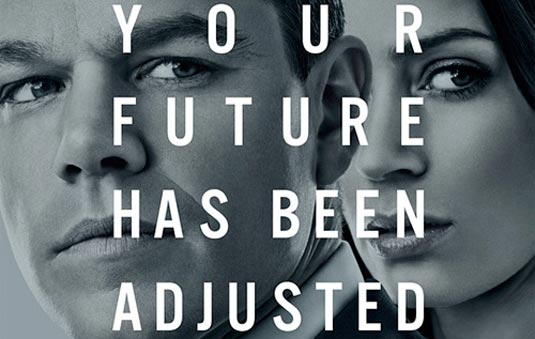
Free Will at the Movies

All sorts of little things alter our trajectories through life.  There's an accident blocking the main road, so you get to Starbucks 10 minutes later, so you don't run into your old girlfriend, so you don't get back together, so you don't get to know her famous lawyer dad, so you don't meet his lawyer pals, so ...

So what?  In "The Adjustment Bureau," we are offered a very interesting "what if?"  What if some of those little incidents aren't actually accidental, but deliberate adjustments designed to keep our lives going "according to plan"?   Many people we see (clue: they're wearing hats) are actually the bureau's agents--angels in the biblical, not the winged cherub, sense, who carry out the plans of The Chairman.

It wasn't always that way.  Humans screwed up badly in the first half of the 20th century, so we've been put on a short leash.  There's a Book of Life in every angel's hands, tightly prescribing who does what, who marries whom, etc.  But--and this is the fun part--the plans are implemented mostly without getting into people's heads.  The angels manage to keep us on course mostly by tinkering with seemingly trivial external events.

Of course, there's got to be a romance. Our hero, played by Matt Damon, is not supposed to get together with a delightfully zany woman he meets, by sheer accident, in the men's room.  His book of life allows the chance encounter, but no further interaction.  The problem is, his guardian angel falls down on the job, calling him a little too late, so he doesn't spill his coffee and doesn't miss his bus.  He meets the woman again, which necessitates an intervention by a whole team from the Bureau.  Now it's man against angel... 

OK, go see the movie. It's a lot of fun.  The movie's background  theory about free will is intriguing. The theory is that, absent any adjustments, we are free (the issue of causal determinism never rears its head).  When our lives are forced into conformity with The Chairman's plans, we are not free.  Adjustments compromise free will and accidents don't.

Here's what's a little ticklish about that:  whether missing the bus is an adjustment or an accident, it looks and feels all the same.  This is a difference that doesn't penetrate the mind/brain.  You'd think that having or lacking free will would be "in here"--inside our heads.  But no, a free Matt Damon is exactly like an unfree Matt Damon.  The difference is "out there," a question of the way his environment works. 

You might be tempted to consider an alternative view:  both adjustments and accidents compromise free will.  Now we don't have to say that Matt Damons who are just alike inside could be free and unfree.  They're all the same--unfree.

Alternatively, you could say that adjustments don't compromise free will and accidents don't compromise free will either. That has some appeal.  Just because an angel makes Matt Damon miss his bus, foreclosing a certain future, doesn't mean he can't still make choices.  He can choose to go to work or go to the movies; to run for the senate or not run for the senate.

In fact, I like the movie's view.  It really does seem like the agent-generated adjustments are special.  The notion that you have free will is essentially the idea that you are the author of your own life--you're running the show, in some important sense.  If your life actually has a second author, operating continually behind the scenes, that does diminish your role.  A whole bunch of accidents would give you a different set of materials to work with, but leave your authorship intact.  At least--usually.  Yes, a really bad series of accidents can narrow your options so much that you are left less free. But on the whole, there is a difference between planned adjustments and unplanned accidents.

I trust there are no angels, there's no Chairman, and there are no Books of Life, but we each have the power to make adjustments for other people.  Parents can have long-term plans for their children, and can alter little events along the way, if they seem to be getting off course.  Too much adjusting does seem freedom-reducing, in a way that life's naturally occurring accidents are not. So there's a bit of a real world moral of the story, for those who want one.

3/10/11

Free Will Plus Angels

Come back Saturday to talk about "The Adjustment Bureau," a fun, interesting movie about free will, angels, predestination, and such.  In the meantime, ponder the Google ngram for "angels" (provided by commenter BH last week).  This blog is definitely in line with the trend.

CLICK TO ENLARGE

3/7/11

Singer plus Commentary

The website "On the Human" has an excerpt on killing animals from the new third edition of Peter Singer's book Practical Ethics, with commentary from Jan Narveson, Mark Bernstein, Lori Gruen, R. G. Frey and others.  Good reading.

3/5/11

The Angels Have It

My angel/slug poll was not take by vast numbers of people, but still there's a trend.  The lexical view wins.  All the angels before any of the slugs--but do ( ye gods) create some slugs. They have some value.

The Till-Kill Argument


Yesterday my animal rights class discussed the "Till-Kill Argument"--an argument due to animal scientist Steven Davis (made famous when Michael Pollan appealed to it in this NYT article).  The argument is that if we want to do the least harm to animals, we're better off with a "veg & beef" diet than a vegan diet.  Here's his math:


3/3/11

What Not to Say

Here's a funny phenomenon.  There are times when all parties to a conversation know that P is true, and also know that all the others know, but saying that P is still prohibited.  Everyone can know that someone's a racist, but it can be incendiary to say it. It can be mutually understood that someone's lying, but saying it can be more inflammatory then the fact itself.

Why do I bring this up?  Because I committed one of these speech crimes recently. I said that the very broad public (as in, the proverbial man/woman in the street) cannot grasp the most advanced ideas in  philosophy. You actually need to do some heavy duty reading, or maybe take some philosophy courses, or maybe even go to graduate school, to understand those ideas. As a matter of fact, my colleagues and I sometimes confess to finding the books of other philosophers difficult. We will outright say we can't follow x, y, or z. Of course.  In any discipline, there are many levels of difficulty, and for any given audience, some stuff is attainable, and some not.

Once people are offended, they like to fan up their own offense by pretending what you said is as offensive as possible.  (This is a strange truth about human psychology.)  So my saying some philosophy is too hard for the public square (folks, it's true) got transformed -- mostly at other blogs -- into the assertion that academics should stay in their ivory towers.  Never mind that I couldn't possibly have said that, considering that I've written two philosophy books for a "not just professionals" audience.  It was "Off with her head, immediately!"

Well, if it must be, it must be. I humbly submit to the will of the people.

X-Phi and Moral Relativism

Massimo Pigliucci talks about Joshua Knobe talking about X-phi and moral relativism in The Philosophers' Magazine.

3/2/11

Animal Stuff

For your interest...

Here's a page of "Top 45 Animal Advocacy Blogs."

I'm reading Simon Fairlie's book Meat: A Benign Extravagance....a very, very detailed book about the environmental ethics of meat.  Rhys Southan has a long review.  What I have learned from Fairlie so far:  it's amazing how a cow takes grass, which we can't eat, and turns it into something we can (apart from moral scruples) eat.  Well, it is amazing.

Not sure if I already put a link to Glass Walls here--PETA's latest meat video. I think it's excellent, even if not utterly perfect. But what's perfect?  A student of mine said everyone should see it. She's right--so here it is. Pass it on.

2/26/11

Angels or Slugs

Tim Mulgan's book Future People  is full of tricky, ingenious, subtle ideas.  It's mainly an attempt to hammer out the ethical rules that govern creating new people.  Here's the rule he winds up proposing  (p. 170)--
The Flexible Lexical Rule. Reproduce if and only if you want to, so long as you are reasonably sure that your child will enjoy a life above the lexical level, and very sure that the risk of your child falling below the zero level is  very small. 
The zero level is the level at which a life is not worth living.  The lexical level is...well, that's what I want to talk about.  "Lexical" connotes "like letters."  All of the As come before any of the Bs.  In our value systems some things take lexical priority over others.  Suppose you are an ardent Apple fan.  You are offered both Apple products and Dell products.  In ever case, you choose the Apple product.  You would rather have one Apple product than any number of Dell products.  But when they run out of Apple products (there aren't that many), you're happy to accept Dell products.  They do have some value to you. Apple stuff has lexical priority (for you) over Dell stuff.

Do some lives have lexical priority over others?  Mulgan thinks so.  Suppose God has already created a world with both angels and slugs.  (There's already variety in this world, so we don't have to worry about that as a desideratum.)  Should God create all the angels he can, before any more slugs?  Or is there some kind of an exchange rate?  Is creating one angel the same as creating a million slugs?  It's plausible to think that angels are lexically prior to slugs.  God should exhaust his angel-making powers before making any slugs, but he should go on to make some slugs. (Don't worry about omnipotence--the God talk here is obviously not to be taken seriously.)

Take a more real-worldish application of the idea: Tom Regan's famous case of four adults and a dog on a sinking lifeboat.  They all have inherent value and rights, he thinks.  In ordinary circumstances, the adults can't eat the dog.  But in this unusual situation, where all will die if nothing is done, he says the dog should be thrown overboard.  The dog has less to lose, in the way of valuable future experiences.  Dog-years just aren't as rich in value as people-years (assuming they're all normal, and other things are equal).

In fact, Regan says it would be better to throw a million dogs overboard, rather than one person.  (Why would we need to throw that many?  Presumably, they're teeny tiny dogs!)  Quick way to capture how Regan values people vs. dogs: he thinks in the lifeboat type situation, people take lexical priority over dogs.  We should save all the (normal) people before any of the (normal) dogs, but then we should go on to save dogs (if we can).

Mulgan, then, is saying that some people's lives take lexical priority. The lives above the lexical line are different--they're autonomous lives; the ones below are non-autonomous.  Don't worry. That doesn't mean he's for using non-autonomous people as slaves or food.  The way Mulgan uses the concept is not drastic.  Before creating a child, we ought to be reasonably sure he or she will live a life above the lexical line. Failing that, we can create children below the lexical line, but above the zero level.

Should we buy into the lexical priority of autonomous people?   How would the line affect the way we treated people once they are born?  Would we have to throw less autonomous people off of lifeboats?  Would a special-ed program have to put extra resources into the highest achieving kids, the ones with the best chance of getting above the lexical line?  And do less for those way below the line, since they'll never have the super-valuable type of life?

But back to basics.  All the angels before any of the slugs?  All the people (on the lifeboat) before any of the dogs?  Do any lives ever take lexical priority over other lives?  This is the most fundamental question, and the one that keeps rolling around in my head.

When the going gets tough, I say "make a poll."  Assume angels are like people, only even better.  And assume slugs have a tiny bit of mental life--only enough to enjoy a good slither.  So what about creating angels and slugs?  Four possibilities-- 

(1)  God should create all the angels before any of the slugs, though if he can't create any more angels, he should create some slugs (the lexical view).

(2)  It's all the same whether God creates one angel or some vast number of slugs (the exchangability view)

(3) It's all the same whether God creates one angel or one slug (the egalitarian view).

(4)  God should create angels only, because slugs have no value (the elitist view).

The poll is in the right column.

2/20/11

Fat Monkeys

Quick last violation of "Saturday only" blogging rule.  For people who think or teach or write about animal rights, this story about obesity research using monkeys and baboons makes perfect fodder for discussion.  Don't miss it!

Reply to Blackford

Now that I've had a chance to read Russell Blackford carefully, I want to respond to a few things he says about my post, "The Emperor's Gnu Clothes." To recap quickly:  I've compared new atheists like Dawkins and Harris to the girl in the original story--they're [admirably!] candid defiers of social convention.  In my second telling of the story, other kids along the parade route get revved up and start ridiculing the naked emperor for his corpulence.  When adults tell them to be careful how they communicate they just get mad at the adults.  So--there's a shift from candor to contempt--aimed both at the emperor and at the adults. 

2/19/11

The Greenest Possible World

A couple of nights ago I gave a presentation on the environmental impact of meat for SMU's vegetarian club.   Here's the slide show--comprehensible without my voice-over, I think.


The slide show makes an argument--that the future will bring either vastly more factory farming or more plant eating.  It cannot bring more traditional farming, with animals grazing under the wide blue sky.  Why not?  Because 30% of the earth's non-ice land surface is already covered in livestock (26%) and feedcrops (4%).  Lovers of wildlife should be extremely concerned.  "Mild" animals--billions of grazing cows and sheep--are literally crowding wild animals out of existence.  They are also contributing to climate change and depleting valuable resources.

There are lots of cool graphs, charts, and maps in the slideshow, many from the UN report Livestock's Long Shadow--a really fabulous resource. 

I think it's quite clear we should eat more plants, but here's what's less clear to me.  From a green point of view, how far (ideally) would we roll back animal farming?  Would we ideally reduce the 30% to 25%...to 20%...to 15%...or to what?  Some animal pastures can be converted to plant farming, with much higher nutritional yields. Plant farming is much more efficient.  But some pastures cannot, so that eliminating animal farming on that land means expanding plant agriculture elsewhere.  I suspect the greenest possible world feeding 9 billion people (in 2050) couldn't be a purely vegan world.

On the other hand, the greenest possible world will also not be one in which the whole world consumes animal protein at the rate that affluent countries do today. Consumption of animal products has to decline, if 9 billion people are going to be fed in 2050, with any land left for other species.  From a strictly environmental standpoint, the moral rule to promote is "eat more plants."  It's all to the good for some to eat none, to compensate for others who over-consume.  But in the greenest and most egalitarian of all possible worlds (that involve 9 billion people living on this planet), I think everyone will eat a little meat.

That's a surprising conclusion to reach, I think.  It's not ethically unproblematic to take the life of any animal, whether or not they have robust rights just like ours.  So it's odd to admit that it's got to be done.  Perhaps the best diagnosis is this:  there are so many humans that our options are tragically narrowed.  We simply cannot all survive and also grant animals the full moral status they are entitled to.  Going into a future with too many people and not enough land, we cannot completely stop using them as food.

On the other hand, we also can't use animals as food to the degree that we do now.  The average American's animal consumption is the highest in the world--250 pounds of meat per year! Consumption of animal products is going to have to decrease, but perhaps not to zero.

Sound right? Look at the charts, maps, and graphs in the slide show, and let me know what you think.

**

"The Emperor's Gnu Clothes" (from January 25) has recently been much discussed (Stangroom, Blackford, Coyne, Schoen, Rosenau).  That's for your reading pleasure. I think I've run out of things to say on the topic.

2/17/11

Female Atheists

So there's a lot of talk about this panel discussion (at the recent American Atheists meet-up in Huntsville, Alabama) at atheist blogs. [Hmm--the video has now been covered up with a complaint-retraction.  Too bad--why not let people watch and make up their own minds?!] As near as I can tell, the discussion started here and now it continues here.

Were the goings on unpardonably sexist?  To begin with, this wasn't a panel of five men and one woman specifically set up to discuss the under-representation of women in the atheist movement.  That would certainly have been ridiculous. It was an "attendees choice" panel designed to respond to attendees questions, whatever they might be.  The second question was about under-representation.

The video (see first link) doesn't, to my mind, reveal men behaving badly. It actually just reveals that a regional atheist meeting is run by "just folks."  Whereas academic, urban types consistently say "men and women," these people say "guys and girls" or (mostly) "males and females." Good heavens, I bet they don't read the New York Times either!  When an audience member gets up and complains about the term "female," the panelists aren't quick enough to point out that they've consistently paired that term with "male." No harm, no foul.

A panelist makes a klutzy joke about calling women "the fairer weaker sex," which reveals that the humor in Alabama isn't quite up to my standards. [4:45 pm:  OK, with that change it's more obnoxious.]

As to the one woman on the panel being drowned out.  I really don't see that.  She's given a chance to speak, but doesn't use it well.  She doesn't seem to have much to say or maybe she's just not a confident public speaker.  It doesn't look to me as if she's bullied or interrupted.

So--I see no special problem with the session, but what about this issue of women being under-represented in the atheist movement?   I know lots of women who don't believe in God, but can't imagine any of them going to an atheist meeting.  Why not?  I think the belief is just not important to them. It's not central to their lives, doesn't define who they are.  They affiliate based on other interests--in culture, politics, books, and (drum roll) being Jewish.  But not based on thinking there ain't no deity.  That's a big "who cares?"

To get them to go to atheist meetings, you'd have to get them to care more.  But would it be good for them to care more?  Would they be better off, or would the meetings just be more gender balanced?  Hard question!

I'm a little different.  Being an atheist is not central to my life and doesn't define who I am.  If I want to make the world a better place, I'm going to choose a different focus.  But I like ideas, philosophy, debate.  For "public intellectuals," atheism is one of the lively subjects of the day.  I'm attracted to corners of the internet where atheism is discussed, and likewise I'd be attracted to real world venues.   Plus, I teach classes where atheism comes up, and both of my books have a connection to the topic. Plus, I've written a few articles for Free Inquiry and written a fair amount about atheism at this blog.

So:  "Pick me, pick me!"  I'd be happy to speak at an atheist meeting--about religion and the good life; or about animal rights and atheism; or (fun, fun, fun) about accommodationism.  Conference organizers could increase the number of female speakers if they put their minds to it.

2/12/11

Atheism in America

I had a lot of fun looking for atheists last week--with Julian Baggini, who is writing an article about atheism in America. He found a bunch, including a bunch of teenagers, some of them deep in the heart of Texas. Think ranches and cowboy churches, and bad coffee with good fried pie. I can't wait for the article to come out (in April).

He also gave a talk to a group comprised of SMU undergraduates and faculty, plus members of a local "fellowship of free thought." He explained what atheism is and isn't, and argued that atheists and theists can get along. Atheists come to be overly anti-theist, he said, when they don't try to understand what religion offers people. It doesn't so much offer doctrine as it offers practices --many positive, like expressing gratitude before meals, and creates communities.

Julian was questioned and challenged a bit, but there was no major battle. Which tells me that atheists out in the real world do not look exactly like atheists on the internet. I had the same sense while listening in on a few interviews.

The more that atheists "come out," the more than everyone's going to know one, and the public perception is going to shift. Not only will it shift way from the longstanding misperception that atheists are immoral people--devil worshippers, maybe. I think it may also shift away from a more recent misperception--that new atheists like Dawkins, Harris, etc., have the typical attitudes. More and more, I think not. They really are anti-theists, and I'm not sure that's true of the rank and file American skeptic.

But we'll see--I suspect Julian's article will shed more light.

2/3/11

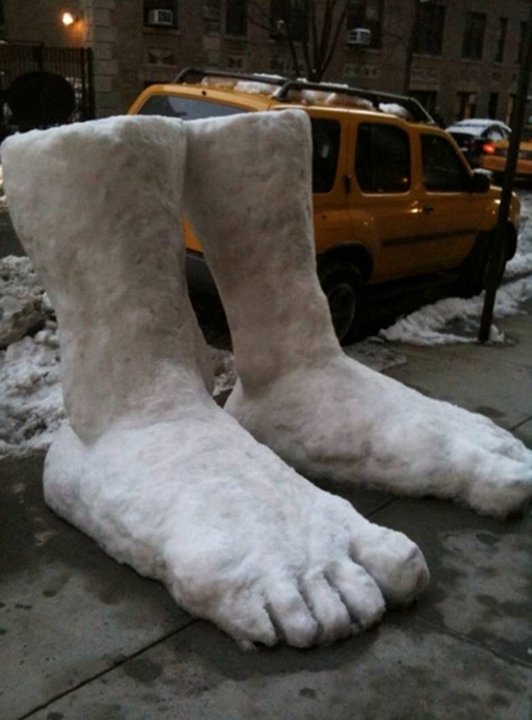
'Sno Joke!


FOUR SCHOOL SNOW DAYS IN DALLAS, TEXAS!

photo via Jerry Coyne

1/29/11

Tiger Mothers, etc.


I was planning on blogging about Battle Hymn of the Tiger Mother today, but I'm not quite far enough along.  This is the publishing sensation of the month, it seems.  By exposing her wildly demanding approach to parenting, and calling it "Chinese," Yale law professor Amy Chua has made herself both a bestselling author and the Wicked Mom of the East.  Not ready to write much about it, but so far I'm finding the book both entertaining and thought-provoking.  It raises some good questions about what we should want for our kids and also about self-deception.  When are you helping your children do their best, and when are you actually creating trophy kids to boost your own self esteem?  I think the author, Amy Chua, may not be aware of that real and worrisome distinction.  Fortunately, she has a sense of humor about herself, and she does allow a question mark to hang over the whole book.  Is this really the way to go, she seems to want us to wonder, even as she sings her battle hymn.

More next week, maybe.  Meanwhile, 'round the web.  The endless conversation continues.  It's been interesting at many points.   Latest topic--this article, which shows (tries to show?) a spill-over effect. In regions of Europe with more religious people, both the religious and the non-religious are happier. In regions with more atheists, both the atheists and the non-atheists are less happy.  Carol Graham cites this (unpublished) study in the extremely interesting book Happiness Around the WorldMy interlocutor (Paul W) is not impressed.

Relatedly, I enjoyed this letter from Stephen Asma, whose Chronicle Review discussion of animism has generated lots of discussion in the blogosphere.

I dropped by this morning at Let Them Eat Meat, and found post-vegan contrarianism is alive and well.  The book Rhys  is discussing (Meat: A Benign Extravagance) looks like one I will need to look at.  Benign?   Well, maybe not quite.  I just discovered this very well-done video, narrated by Paul McCartney--Glass Walls.  The vegetarian group for which I'm faculty adviser recently did a "pay per view" event--$1 to each person who would watch the video.  Good for them! The group has a cool website too.

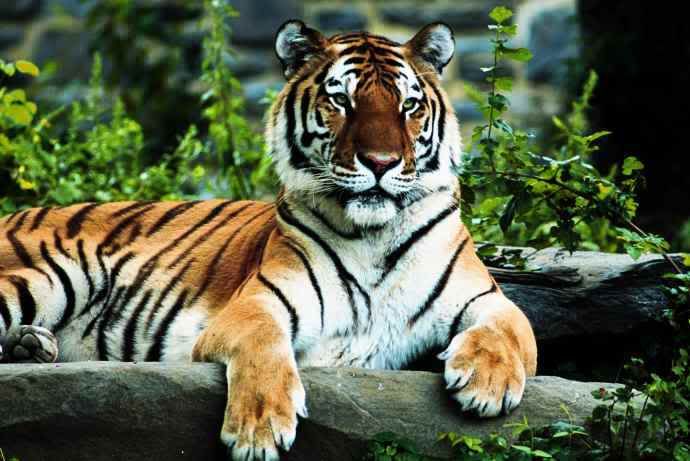
Last but not least:  does a shaved tiger have any stripes?  Thanks to my husband, who is reading The Tiger, I now know the answer.